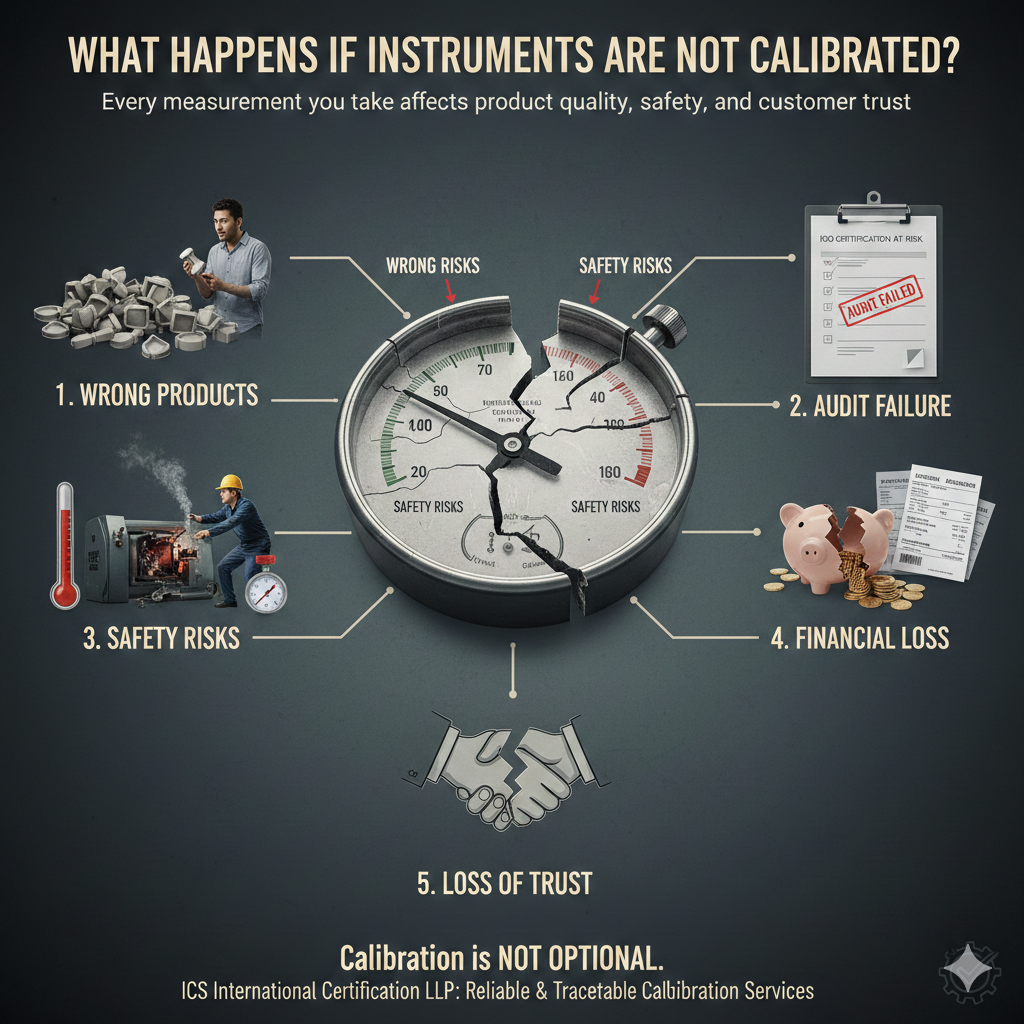
Every measurement you take affects product quality, safety, and customer trust. When instruments are not calibrated, their readings slowly become inaccurate — and the problems begin.
1. Wrong Products
Incorrect readings lead to out-of-tolerance manufacturing, rework, rejection, and customer complaints.
2. Audit Failure
ISO and customer audits require valid calibration records. Missing calibration can cause non-conformities or certification risk.
3. Safety Risks
Wrong pressure, temperature, or gas readings can lead to accidents, equipment damage, or worker hazards.
4. Financial Loss
Scrap, recalls, downtime, and penalties often cost far more than regular calibration.
5. Loss of Trust
Unreliable measurement results damage credibility and business reputation.
Conclusion:
Calibration is not optional — it ensures accuracy, safety, compliance, and customer confidence.
ICS International Certification LLP supports organizations with reliable and traceable calibration services so every measurement can be trusted.