By ICS International Certification LLP
In today’s competitive and quality-driven market, organizations cannot afford inaccuracies in measurement and testing processes. Calibration forms the backbone of any effective Quality Assurance (QA) system, ensuring that instruments and equipment deliver precise and reliable results. At ICS International Certification LLP, we emphasize calibration as a critical component for maintaining consistency, compliance, and customer satisfaction across industries.
What is Calibration?
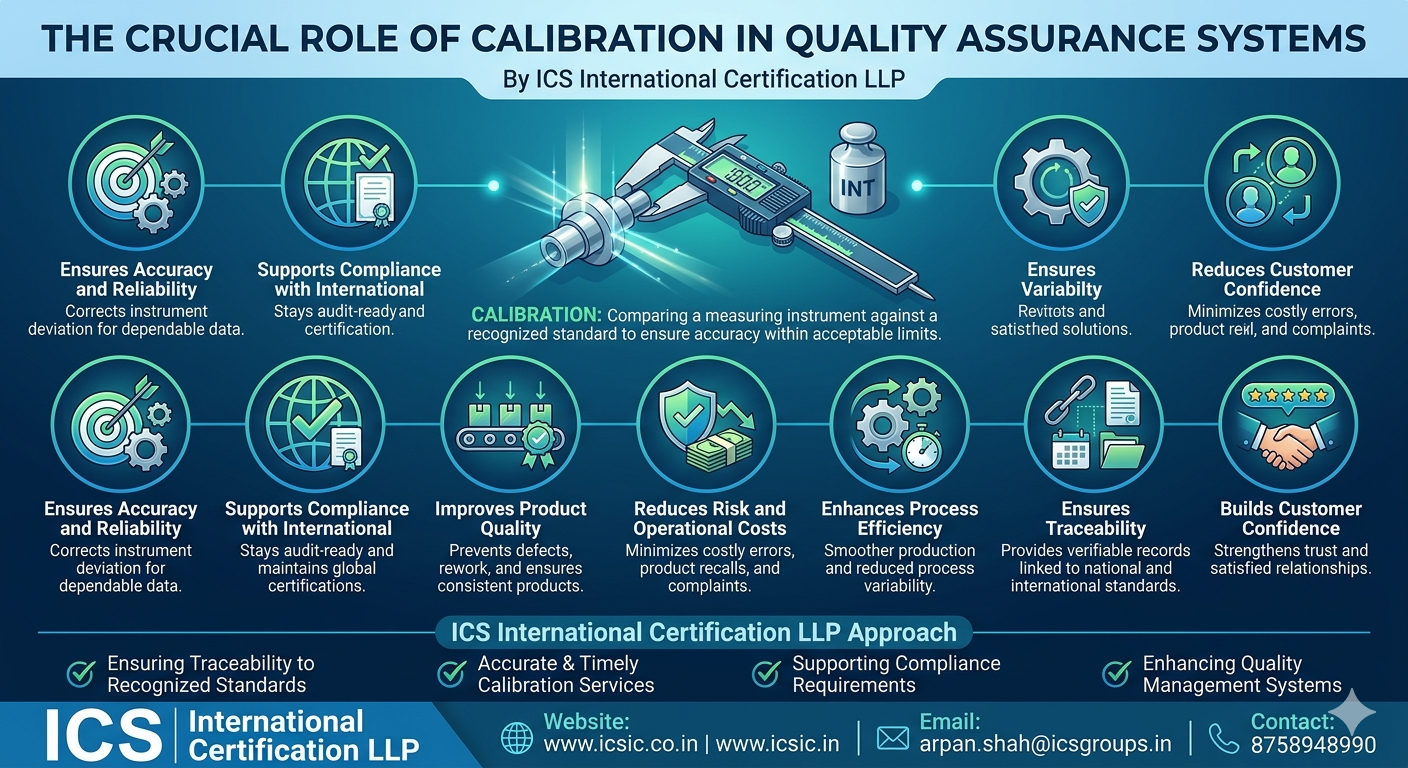
Calibration is the process of comparing a measuring instrument against a recognized standard to identify and correct any deviation. This ensures that the instrument produces accurate readings within acceptable limits.
Why Calibration is Essential in Quality Assurance
1. Ensures Accuracy and Reliability
Accurate measurements are fundamental to quality. Calibration helps eliminate errors by aligning instruments with standard references, ensuring reliable and consistent data.
2. Supports Compliance with International Standards
Quality management systems require strict adherence to globally recognized standards. Regular calibration ensures compliance with applicable requirements, helping organizations stay audit-ready and maintain certifications.
3. Improves Product Quality
Inaccurate instruments can lead to defects, rework, or product failure. Calibration ensures that all measurements used in production and testing are correct, directly contributing to consistent product quality.
4. Reduces Risk and Operational Costs
Uncalibrated equipment can cause serious financial and reputational damage. Calibration minimizes risks by detecting deviations early, preventing costly errors, product recalls, and customer complaints.
5. Enhances Process Efficiency
When instruments function correctly, processes run smoothly. Calibration reduces variability, improves efficiency, and ensures uniformity across operations.
6. Ensures Traceability
Calibration provides traceability to national and international standards through documented records and certificates. This traceability is crucial during audits and inspections.
7. Builds Customer Confidence
Reliable quality leads to satisfied customers. Calibration ensures that products meet specifications consistently, strengthening trust and long-term relationships.
ICS International Certification LLP Approach
At ICS International Certification LLP, we provide comprehensive calibration and certification support tailored to industry needs. Our approach focuses on:
- Ensuring traceability to recognized standards
- Providing accurate and timely calibration services
- Supporting organizations in meeting compliance requirements
- Enhancing overall quality management systems
Conclusion
Calibration is not just a routine activity—it is a strategic necessity for any organization committed to quality. By integrating proper calibration practices into QA systems, businesses can achieve higher accuracy, improved compliance, reduced risks, and greater customer satisfaction.
Partnering with a trusted organization like ICS International Certification LLP ensures that your calibration processes are reliable, compliant, and aligned with global best practices.
For more information about our calibration and certification services, visit:
www.icsic.co.in | www.icsic.in
Email: arpan.shah@icsgroups.in
Contact: 8758948990