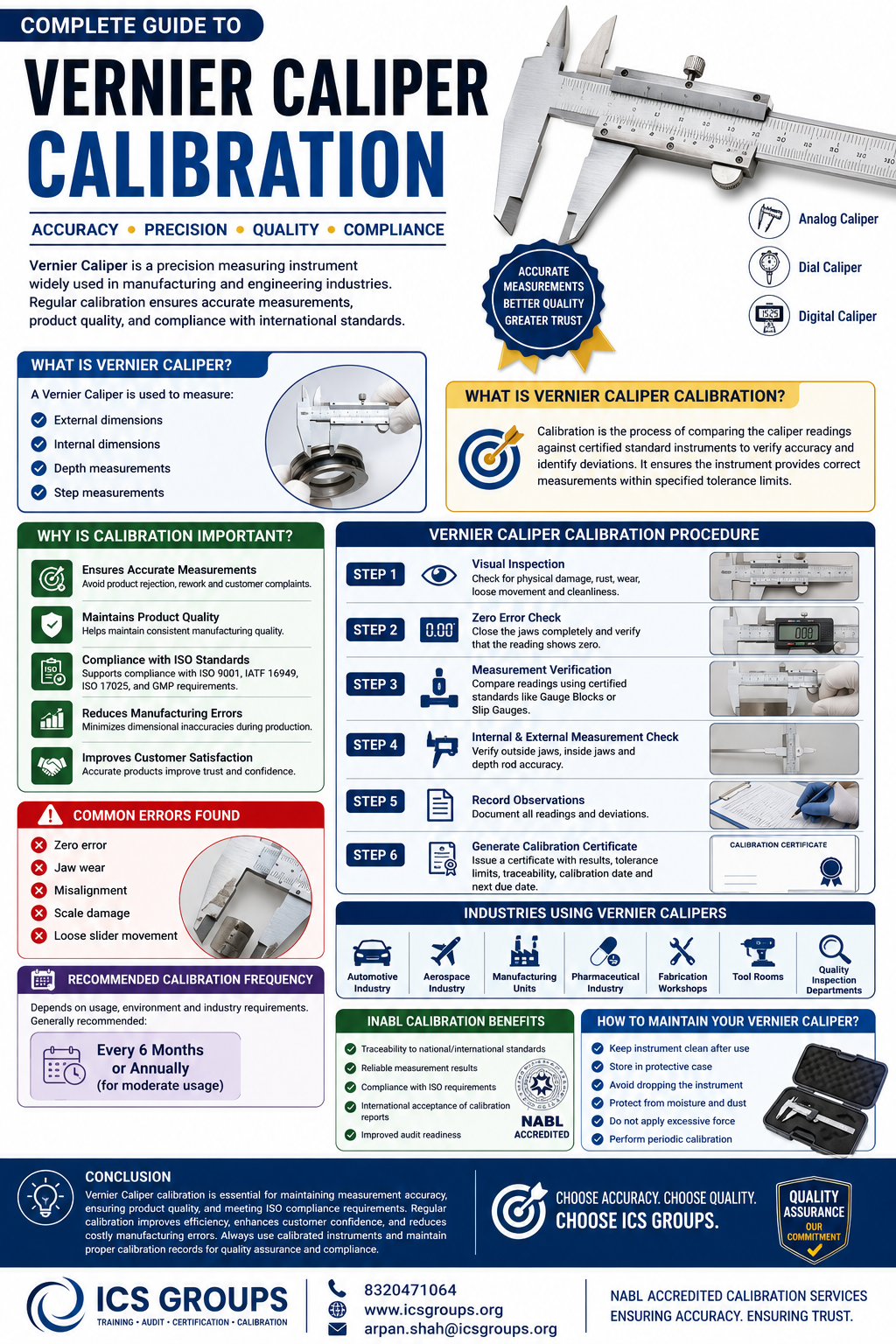
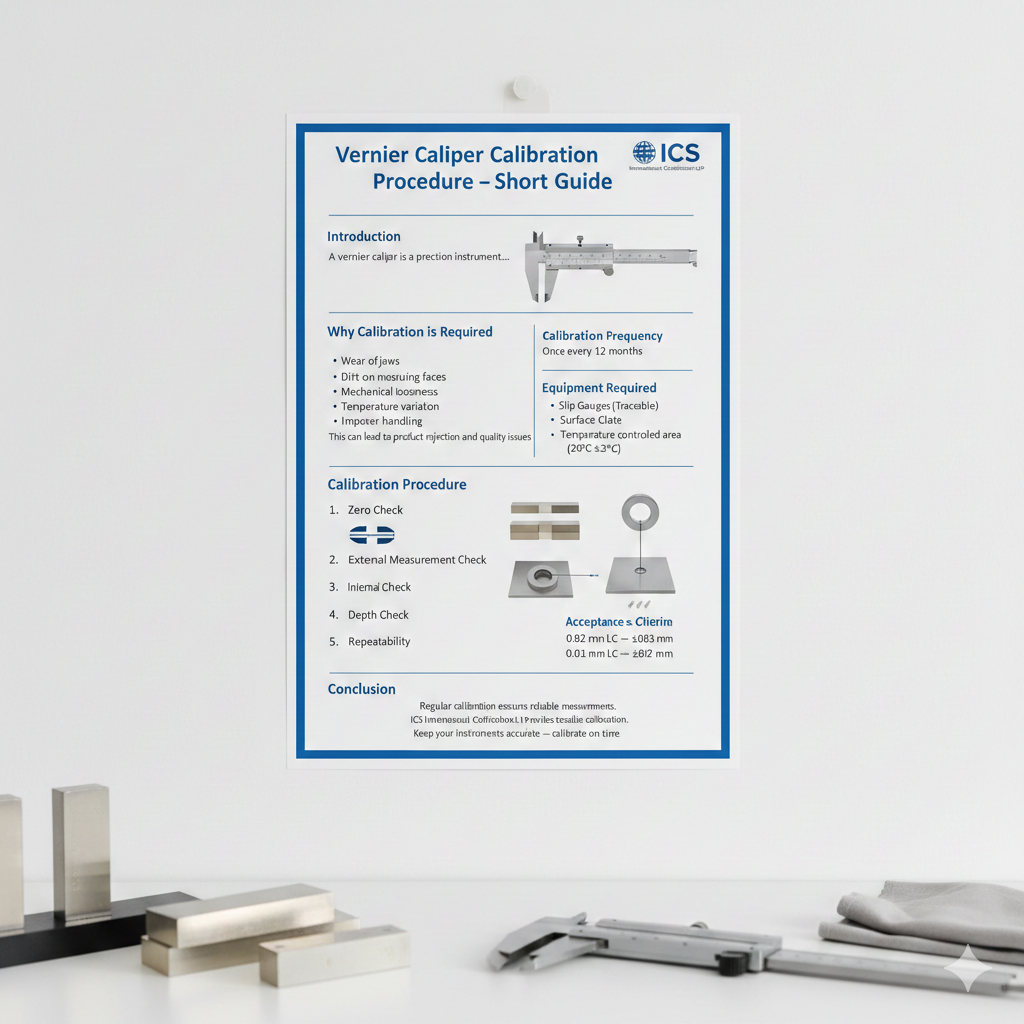
A vernier caliper is a precision instrument used to measure external, internal and depth dimensions. To ensure accurate measurement and ISO compliance, periodic calibration is required.
Why Calibration is Required
Inaccurate readings may occur due to:
- Wear of jaws
- Dirt on measuring faces
- Mechanical looseness
- Temperature variation
- Improper handling
This can lead to product rejection and quality issues.
Calibration Frequency
Recommended: Once every 12 months
Equipment Required
- Slip Gauges (Traceable)
- Surface Plate
- Cleaning Cloth
- Temperature controlled area (20°C ±2°C)
Calibration Procedure
1. Zero Check
Close jaws and verify zero alignment. Record zero error if present.
2. External Measurement Check
Measure gauge blocks at 10, 25, 50, 75 & 100 mm and record error.
3. Internal Measurement Check
Check internal jaws using standard sizes (10–50 mm).
4. Depth Check
Verify depth rod using step gauge or surface plate.
5. Repeatability
Take 3 readings at same point — readings should be consistent.
Acceptance Criteria
Typical accuracy:
- 0.02 mm LC → ±0.03 mm
- 0.01 mm LC → ±0.02 mm
Conclusion
Regular calibration ensures reliable measurements, audit compliance, and product quality.
ICS International Certification LLP provides traceable calibration with proper reports and uncertainty evaluation.
Keep your instruments accurate — calibrate on time.