A micrometer is a precision instrument used for accurate measurement of thickness and diameter. Regular calibration ensures reliable inspection results and compliance with quality standards.
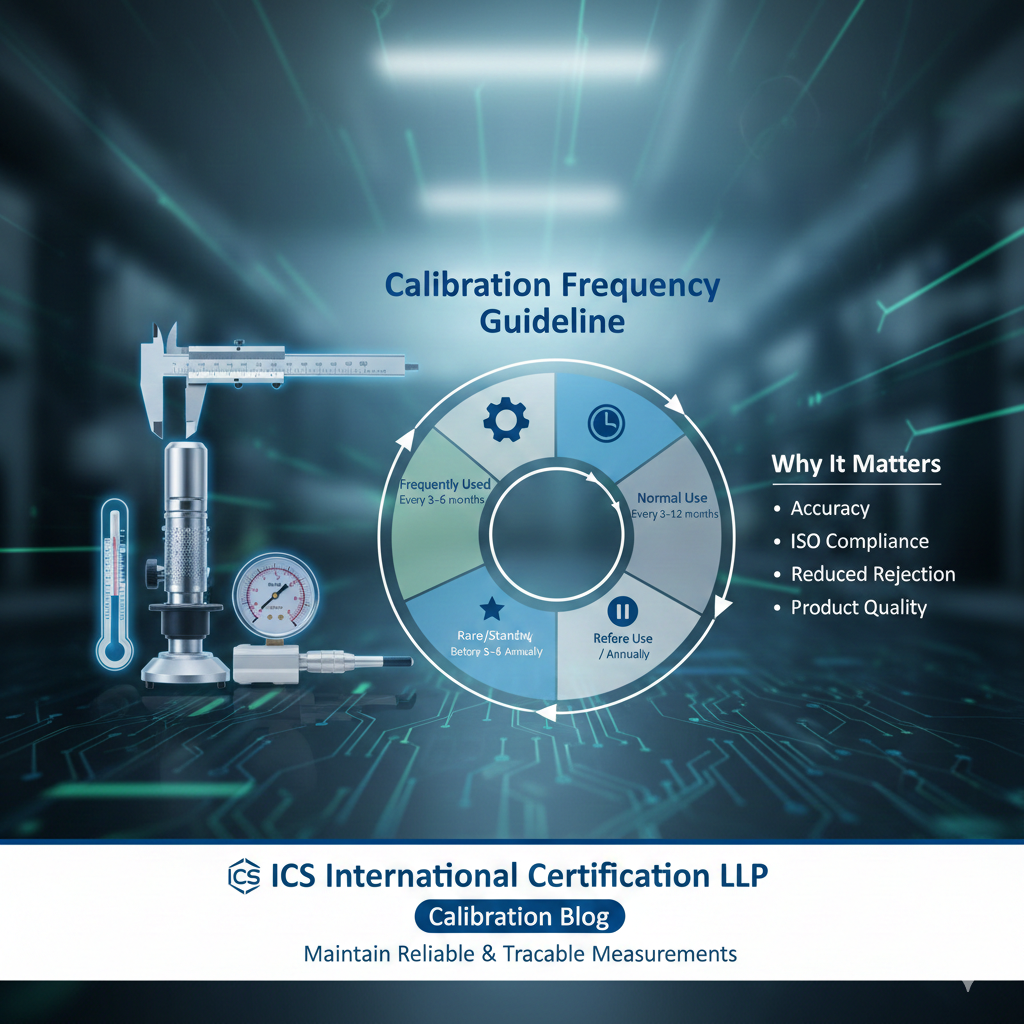
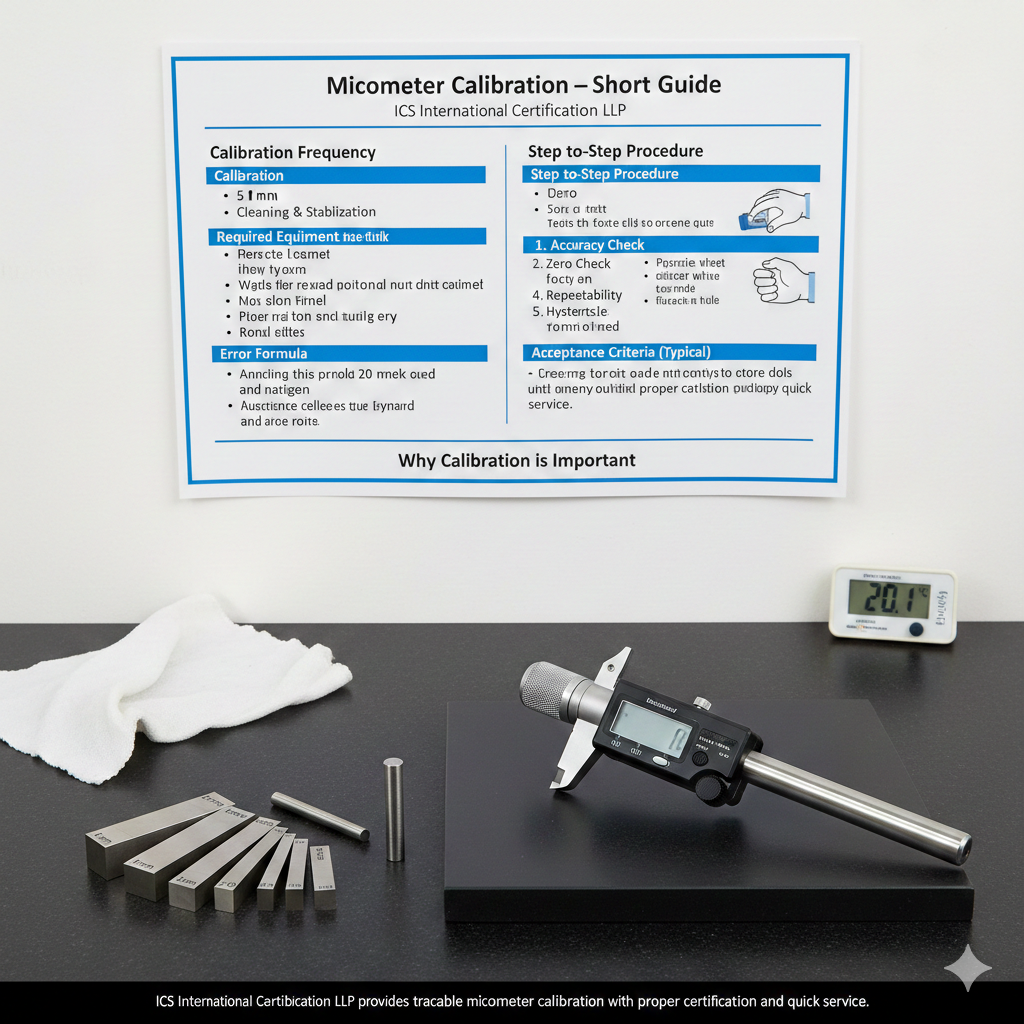
Calibration Frequency
- Every 6–12 months
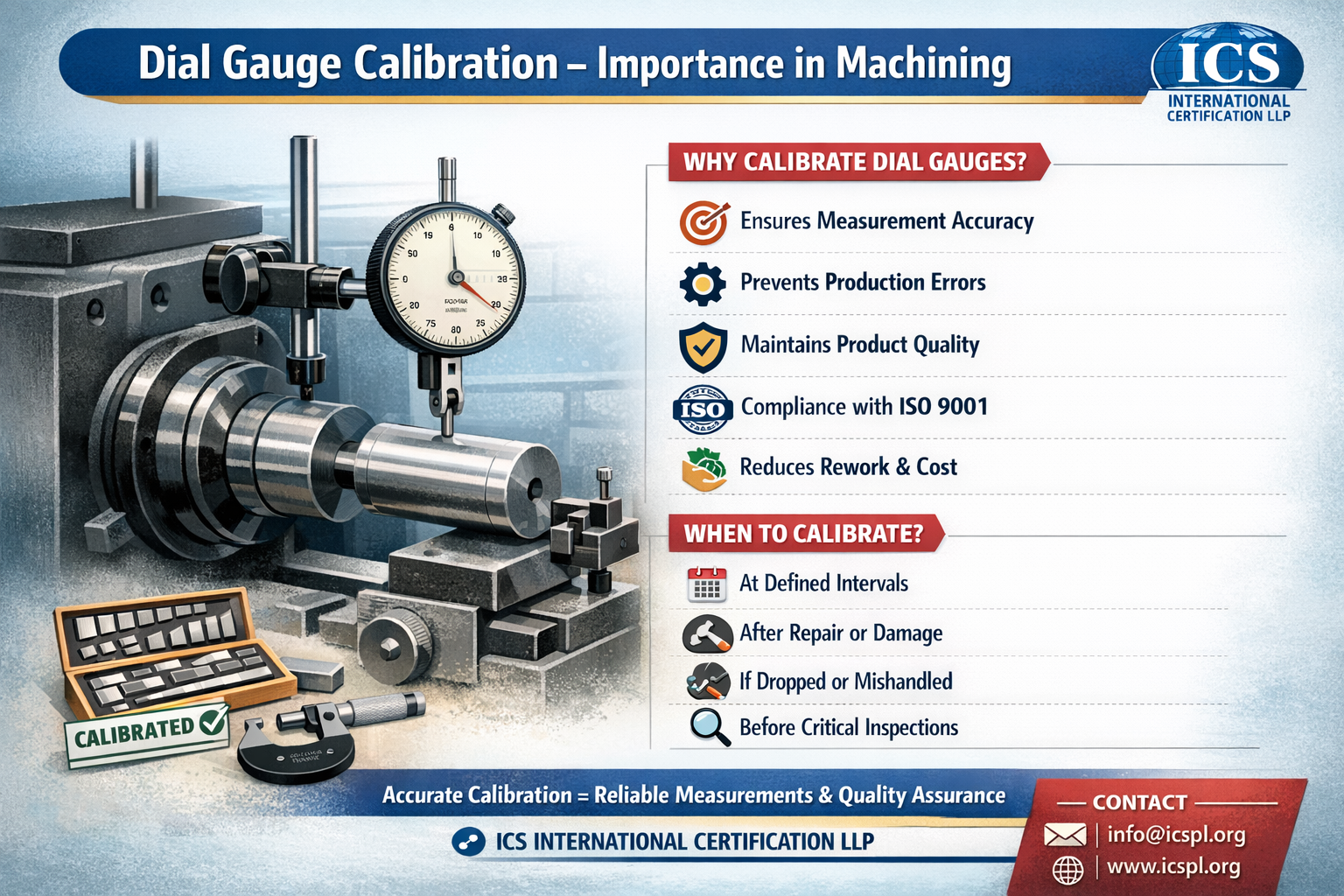
- After repair or damage
- When incorrect readings are suspected
Required Equipment
- Gauge Blocks (traceable)
- Setting Rod (for large range)
- Surface Plate
- Cleaning cloth
- Temperature: 20 ± 2°C
Step-by-Step Procedure
1. Cleaning & Stabilization
Clean measuring faces and keep the instrument in lab temperature for 15 minutes.
2. Zero Check
Close spindle using ratchet.
Reading should be 0.00 mm → adjust if required.
3. Accuracy Check
Measure gauge blocks at multiple points (5, 10, 15, 20, 25 mm).
Record readings and calculate error.
4. Repeatability
Measure same block 5 times → variation within least count.
5. Hysteresis
Compare readings while closing and opening.
Error Formula
Error = Observed Reading – Standard Value
Acceptance Criteria (Typical)
- 0–25 mm micrometer: ±0.004 mm
Why Calibration is Important
- Ensures measurement accuracy
- Reduces rejection & rework
- Maintains ISO compliance
ICS International Certification LLP provides traceable micrometer calibration with proper certification and quick service.