In any industry where precision matters, the accuracy of measuring instruments is critical. From manufacturing and pharmaceuticals to laboratories and engineering, reliable measurements ensure product quality, safety, and compliance with international standards.
At ICS International Certification LLP, we emphasize the importance of a well-defined calibration lifecycle to maintain measurement integrity and audit readiness.
📌 What is Calibration?
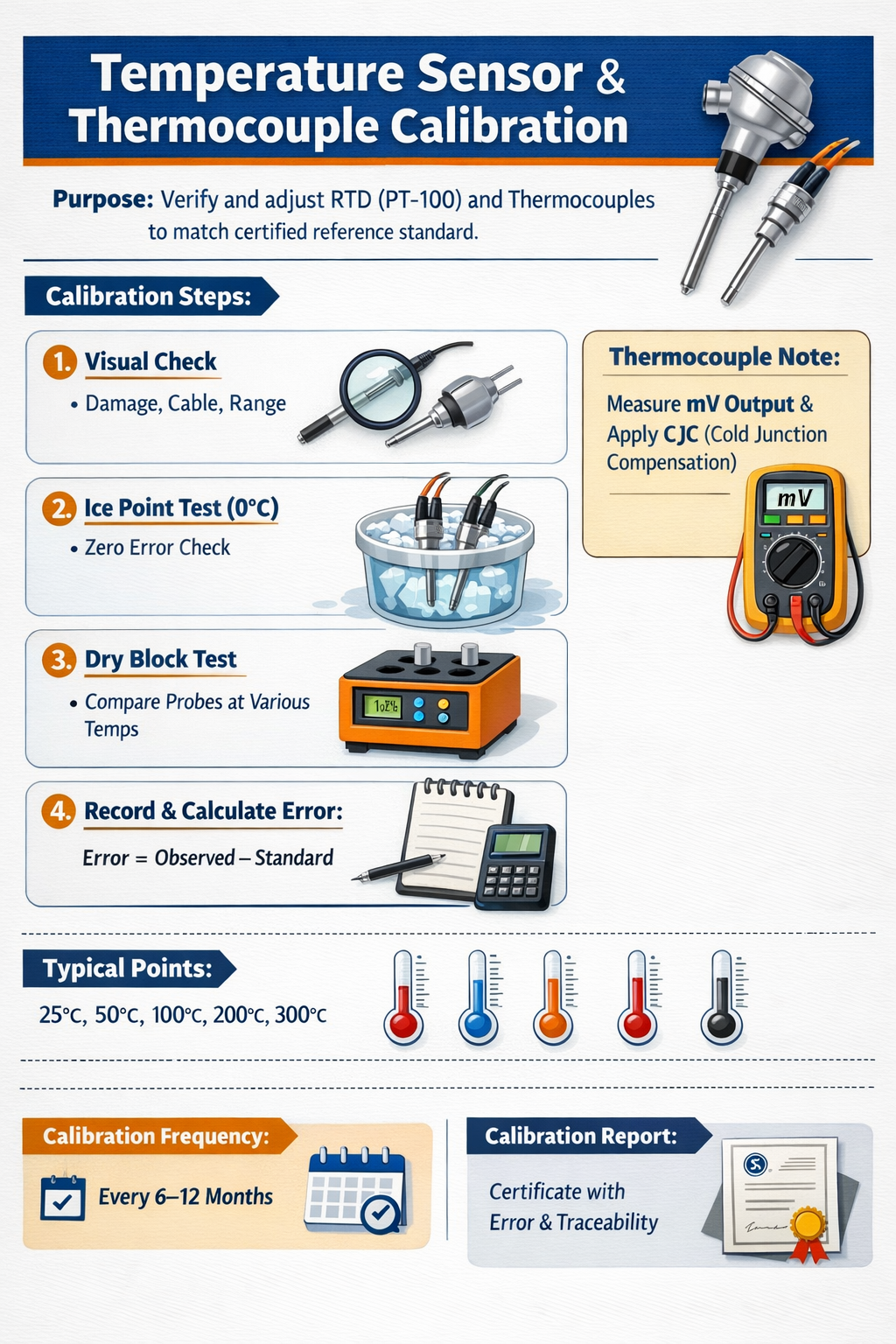
Calibration is the process of comparing a measuring instrument against a known standard to verify its accuracy. It ensures that measurements are traceable, reliable, and within acceptable limits.
🔄 Understanding the Calibration Lifecycle
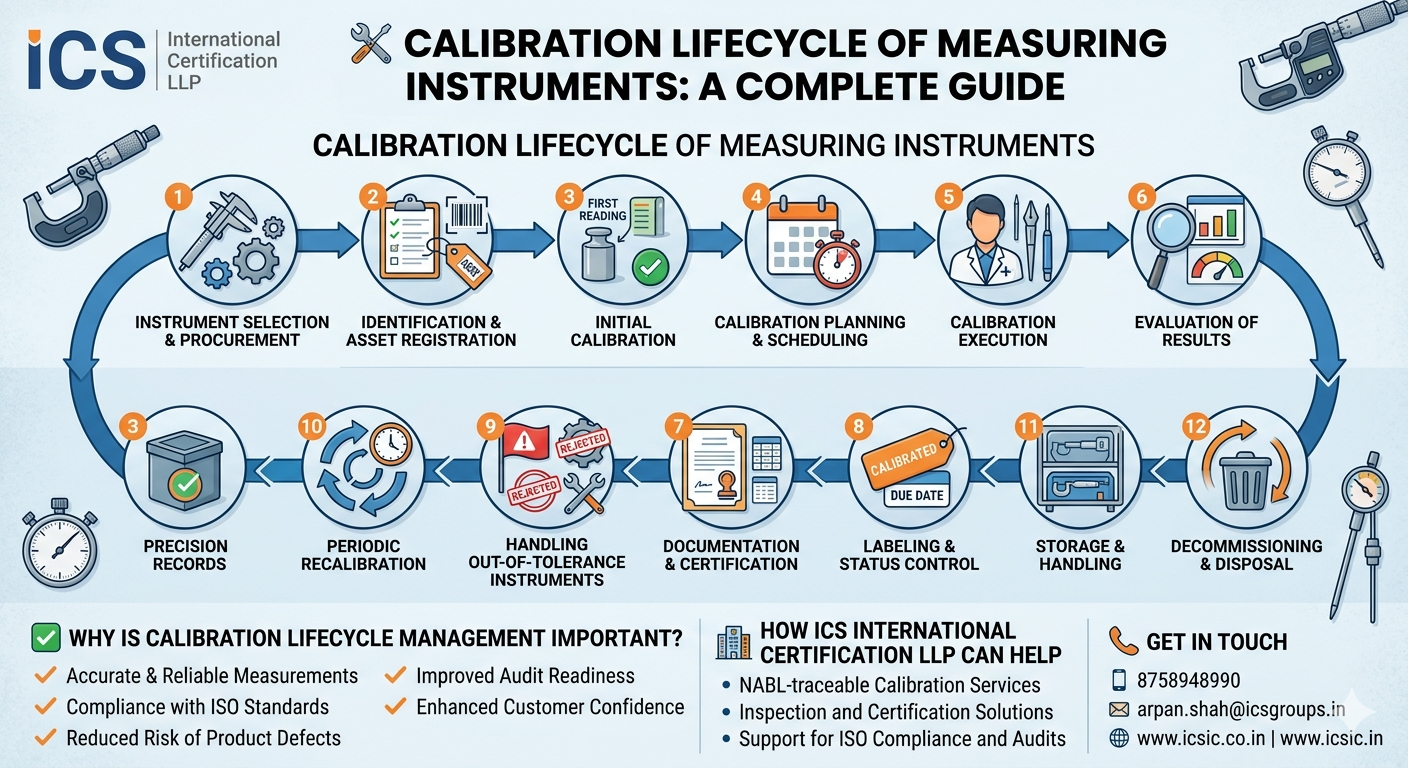
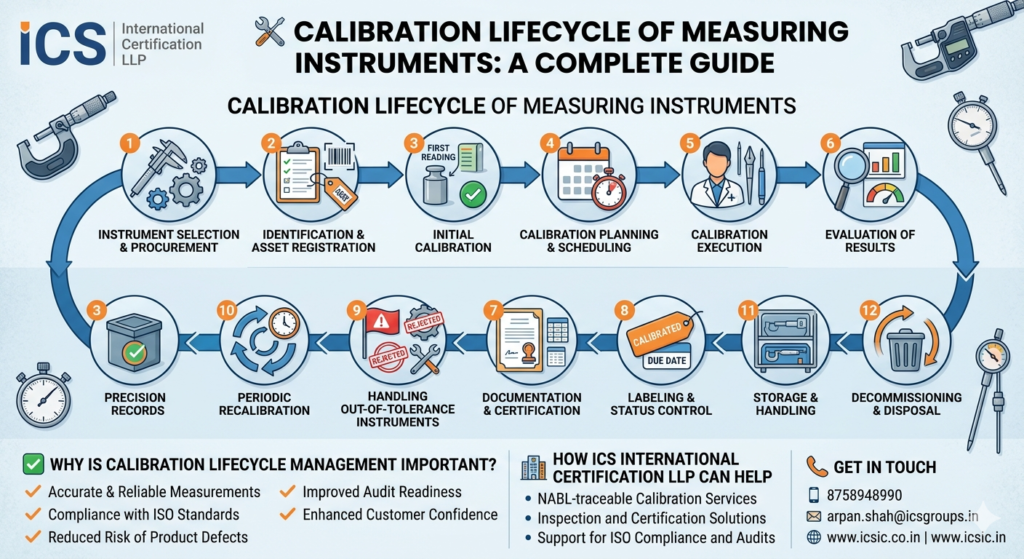
A measuring instrument goes through several stages during its life. Managing each stage effectively ensures consistent performance and compliance.
🏁 1. Instrument Selection & Procurement
The lifecycle begins with selecting the right instrument based on:
- Required accuracy and measurement range
- Environmental conditions
- Industry standards and compliance requirements
Choosing the correct instrument reduces long-term calibration risks.
🆔 2. Identification & Asset Registration
Each instrument should be:
- Assigned a unique identification number
- Recorded in a calibration management system
Details such as make, model, serial number, and location must be documented for traceability.
⚙️ 3. Initial Calibration (Baseline Calibration)
Before first use, instruments must undergo initial calibration to:
- Establish baseline performance
- Ensure traceability to national or international standards
This step is crucial for compliance with quality systems like ISO standards.
📅 4. Calibration Planning & Scheduling
Calibration intervals should be defined based on:
- Manufacturer recommendations
- Frequency of use
- Criticality of the measurement
A structured schedule helps avoid overdue instruments and audit non-conformities.
🔬 5. Calibration Execution
Calibration is performed using:
- Certified reference standards
- Approved procedures
The instrument’s readings are compared with standard values, and adjustments are made if required.
📊 6. Evaluation of Results
After calibration, results are analyzed to determine:
- In-tolerance (Pass)
- Out-of-tolerance (Fail)
Measurement uncertainty may also be evaluated depending on requirements.
📝 7. Documentation & Certification
A calibration certificate is issued including:
- Measurement results
- Deviations and corrections
- Traceability information
Proper documentation is essential for audits and compliance with standards like ISO 9001 and ISO/IEC 17025.
🏷️ 8. Labeling & Status Control
Each calibrated instrument is labeled with:
- Calibration date
- Due date
- Status (Calibrated / Rejected)
This ensures easy identification and prevents misuse.
🚫 9. Handling Out-of-Tolerance Instruments
If an instrument fails calibration:
- It must be removed from service
- Repaired or recalibrated
- Impact analysis should be conducted on previous measurements
Timely action minimizes quality risks.
🔁 10. Periodic Recalibration
Calibration is not a one-time activity. Instruments must be recalibrated at defined intervals to:
- Maintain accuracy
- Detect drift over time
Intervals may be adjusted based on historical performance.
📦 11. Storage & Handling
Proper storage conditions help prevent:
- Physical damage
- Environmental impact (temperature, humidity, dust)
Good handling practices extend instrument life.
❌ 12. Decommissioning & Disposal
When an instrument becomes:
- Obsolete
- Irreparable
- Unreliable
🔁 Calibration Lifecycle at a Glance
Procurement → Registration → Initial Calibration → Use → Periodic Calibration → Evaluation → Adjustment/Repair → Continued Use → Decommission
✅ Why is Calibration Lifecycle Management Important?
Effective lifecycle management ensures:
- ✔️ Accurate and reliable measurements
- ✔️ Compliance with ISO standards
- ✔️ Reduced risk of product defects
- ✔️ Improved audit readiness
- ✔️ Enhanced customer confidence
🏢 How ICS International Certification LLP Can Help
At ICS International Certification LLP, we provide:
- NABL-traceable calibration services
- Inspection and certification solutions
- Support for ISO compliance and audits