Purpose:
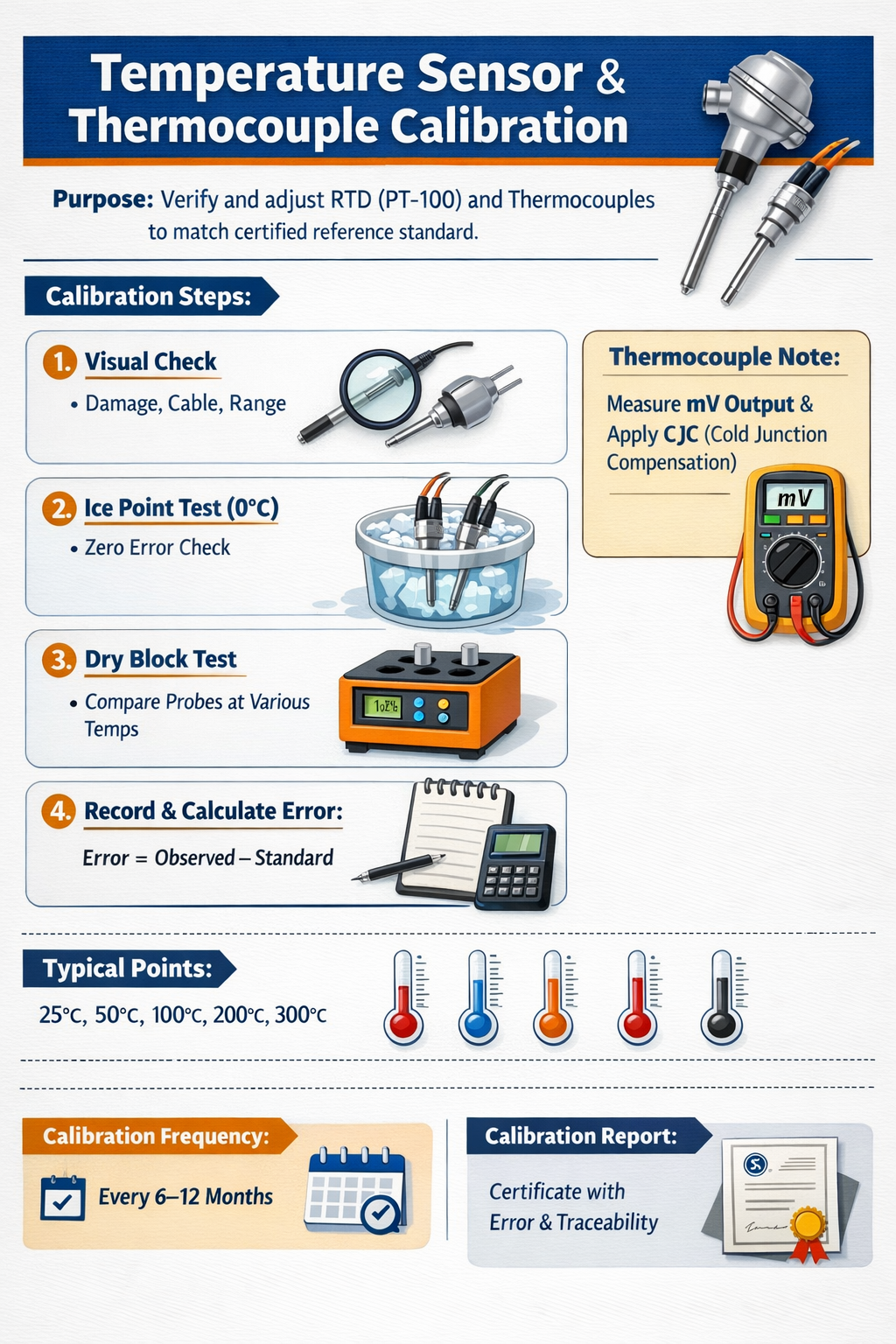
To verify and adjust temperature sensors (RTD/PT-100) and thermocouples so readings match a certified reference standard.

Method (Comparison):

  1. Visual Check – damage, cable, range.
  2. Ice Point Test (0°C) – check zero error using ice bath.
  3. Dry Block / Oil Bath Test – compare test probe with reference probe at multiple temperature points.
  4. Record Readings and calculate error:

Error=ObservedStandardError = Observed − StandardError=Observed−Standard

Thermocouple Note:
Measure output in mV and compare with standard thermocouple table (apply cold junction compensation).

Typical Points:
25°C, 50°C, 100°C, 200°C, 300°C (as per range)

Frequency:
6–12 months (or as per process criticality)

Output:
Calibration certificate with error, uncertainty, and traceability.
Leave a Reply

Your email address will not be published. Required fields are marked *

Explore More

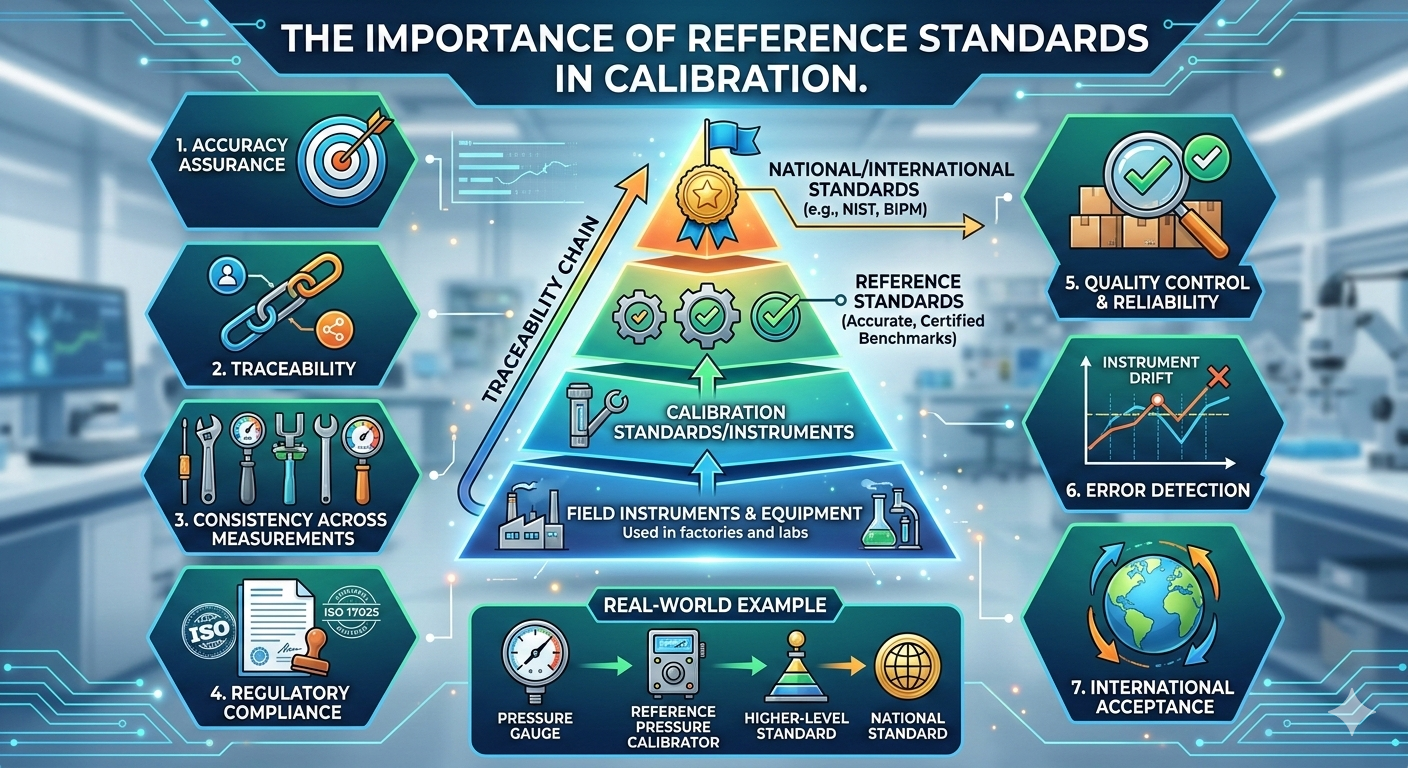
Importance of Reference Standards in Calibration

The importance of reference standards in calibration is fundamental to ensuring accurate, reliable, and consistent measurements across industries. Here’s a clear breakdown: 🔍 What Are Reference Standards? Reference standards are

Benefits of Annual Calibration Contract (AMC)

By ICS International Certification LLP An Annual Calibration Contract (AMC) with ICS International Certification LLP ensures that your measuring instruments remain accurate, compliant, and reliable throughout the year. Our expert

Calibration Tolerance vs Accuracy vs Precision

In calibration and measurement science, accuracy, precision, and tolerance are three different but related concepts used to evaluate the performance of measuring instruments. 1. Accuracy Accuracy refers to how close