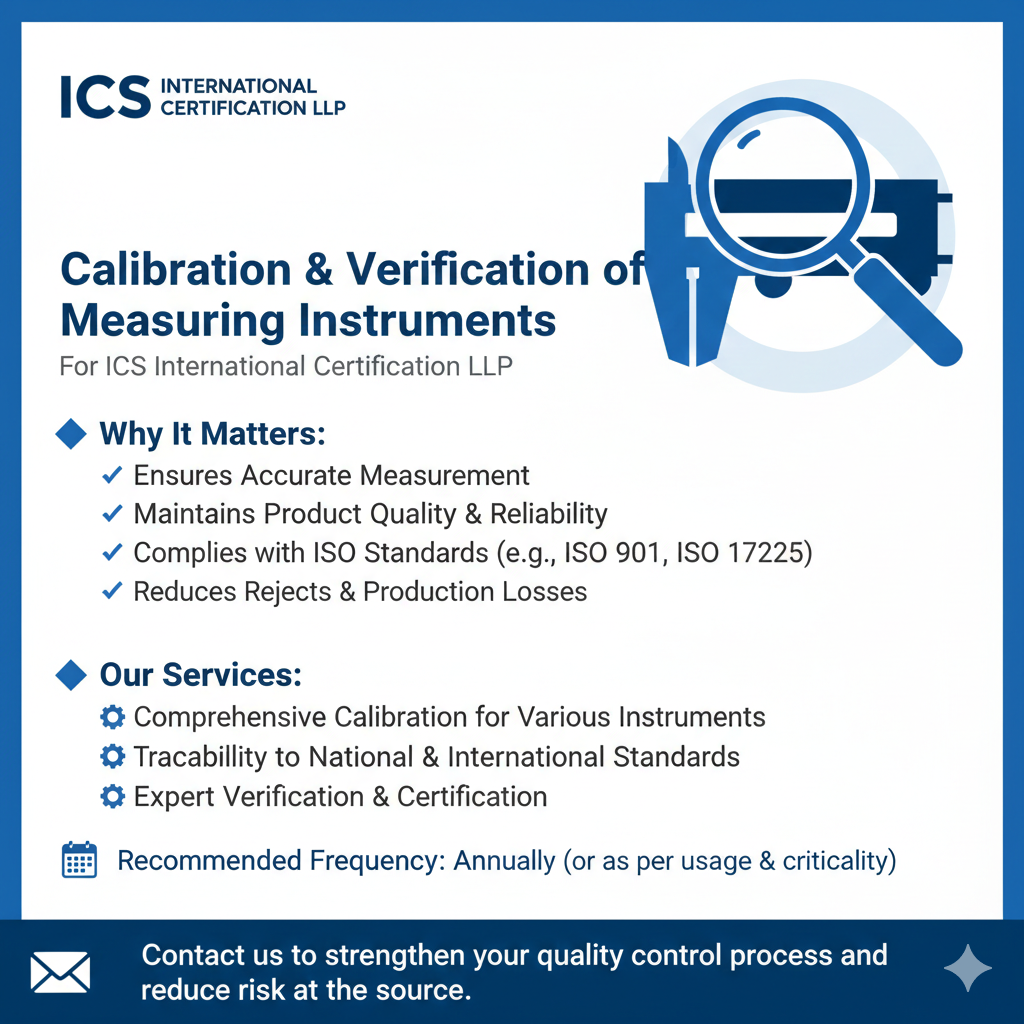
ICS International Certification LLP

Weighing balance calibration is the process of checking and adjusting a balance using certified standard weights to ensure accurate and reliable measurement.

πŸ”Ή Why It Is Important:

  • Ensures accurate production & quality control
  • Maintains ISO 9001 compliance
  • Provides traceability to national standards
  • Reduces product rejection & audit non-conformities

πŸ”Ή Standard Requirement:

Calibration should be done by an ISO/IEC 17025 accredited laboratory using certified reference weights.

πŸ”Ή Basic Calibration Steps:

  1. Visual inspection & leveling
  2. Zero adjustment
  3. Apply certified test weights
  4. Record error & uncertainty
  5. Issue calibration certificate

Calibration frequency: Once a year (or as per usage & criticality).

If required, I can also create a short LinkedIn post version for ICS.
Leave a Reply

Your email address will not be published. Required fields are marked *

Explore More

How Often Should Measuring Instruments Be Calibrated?

There is no fixed calibration interval for all measuring instruments. The frequency depends on usage, accuracy requirement, environment, and past performance of the instrument. General Guideline Why It Matters Regular

Pressure Gauge Calibration-ICS International Certification LLP

Pressure gauges are used to monitor operating pressure in machines, pipelines, boilers, and production systems. With time, vibration, temperature changes, and mechanical wear cause the gauge to lose accuracy. Calibration

Calibration Certificate: How to Read & Understand It

Calibration Certificate: How to Read & Understand It (Short Guide) A calibration certificate confirms that your measuring instrument is accurate and traceable to standard references. It is essential for ISO