By ICS International Certification LLP
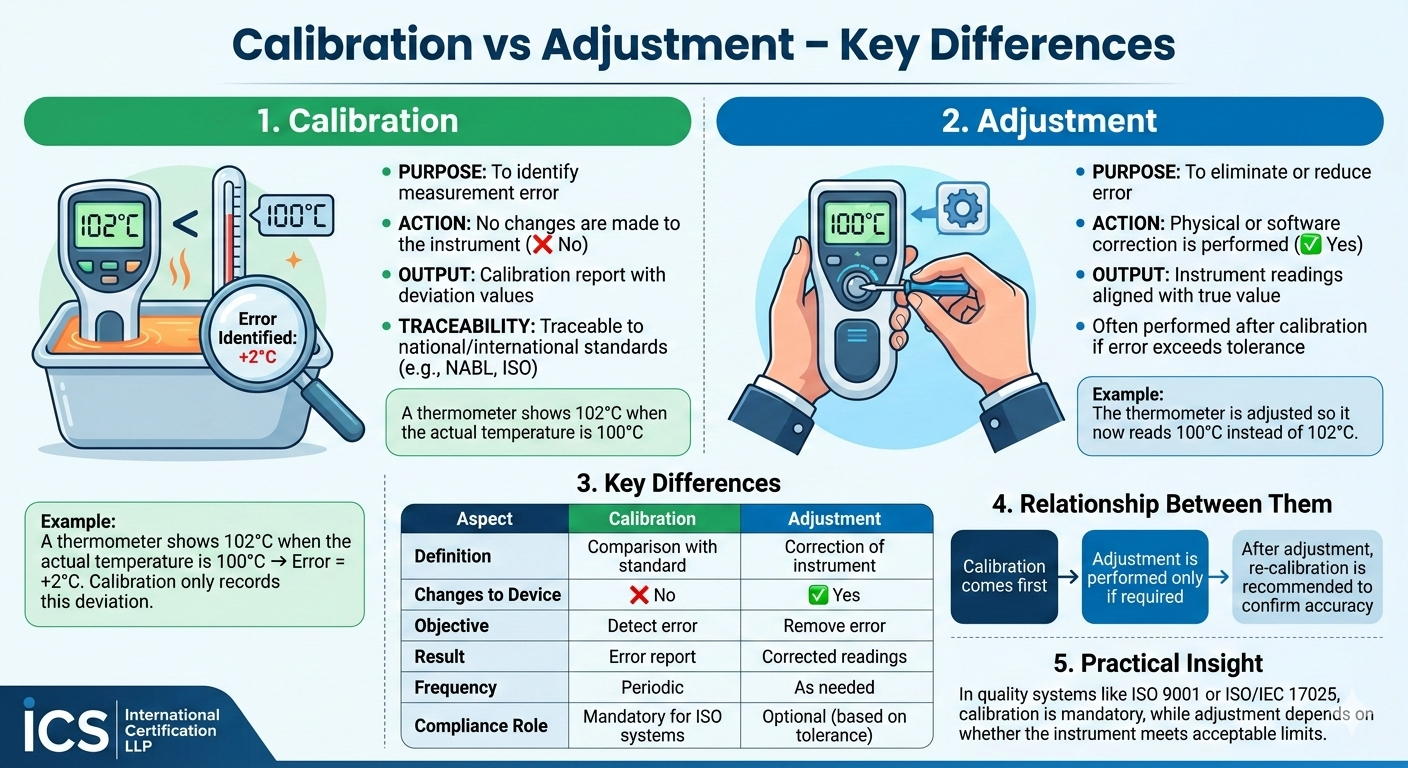
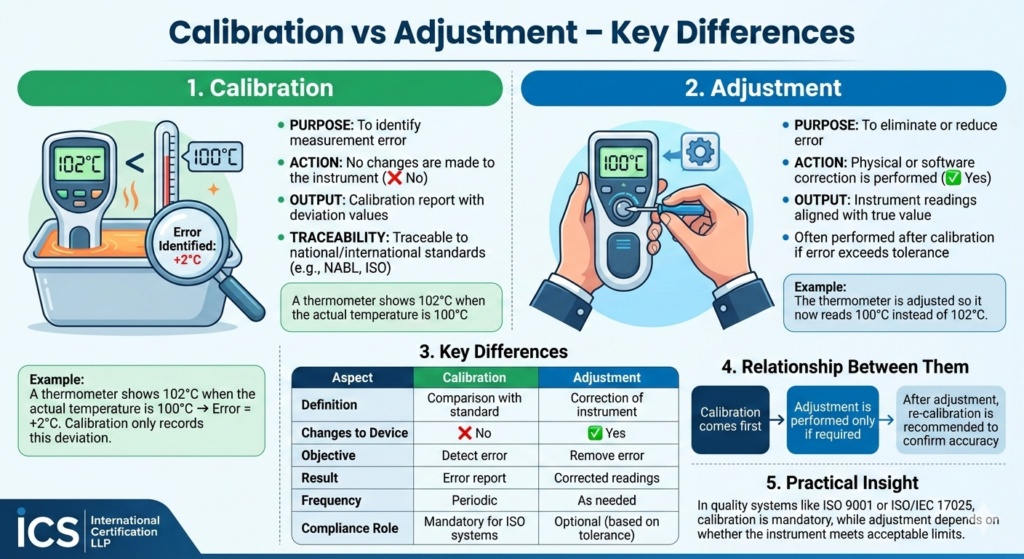
1. Calibration
Calibration is the process of comparing a measuring instrument against a known standard to determine its accuracy.
Key Points:
- Purpose: To identify measurement error
- Action: No changes are made to the instrument
- Output: Calibration report with deviation values
- Traceability: Must be traceable to national/international standards (e.g., NABL, ISO)
Example:
A thermometer shows 102°C when the actual temperature is 100°C → Error = +2°C
👉 Calibration only records this deviation.
2. Adjustment
Adjustment is the process of correcting the instrument so that its readings match the standard.
Key Points:
- Purpose: To eliminate or reduce error
- Action: Physical or software correction is performed
- Output: Instrument readings aligned with true value
- Often performed after calibration if error exceeds tolerance
Example:
The thermometer is adjusted so it now reads 100°C instead of 102°C.
3. Key Differences
| Aspect | Calibration | Adjustment |
|---|---|---|
| Definition | Comparison with standard | Correction of instrument |
| Changes to Device | ❌ No | ✅ Yes |
| Objective | Detect error | Remove error |
| Result | Error report | Corrected readings |
| Frequency | Periodic | As needed |
| Compliance Role | Mandatory for ISO systems | Optional (based on tolerance) |
4. Relationship Between Them
- Calibration comes first
- Adjustment is performed only if required
- After adjustment, re-calibration is recommended to confirm accuracy
5. Practical Insight
In quality systems like ISO 9001 or ISO/IEC 17025, calibration is mandatory, while adjustment depends on whether the instrument meets acceptable limits.