🔧 Digital Pressure Calibrator
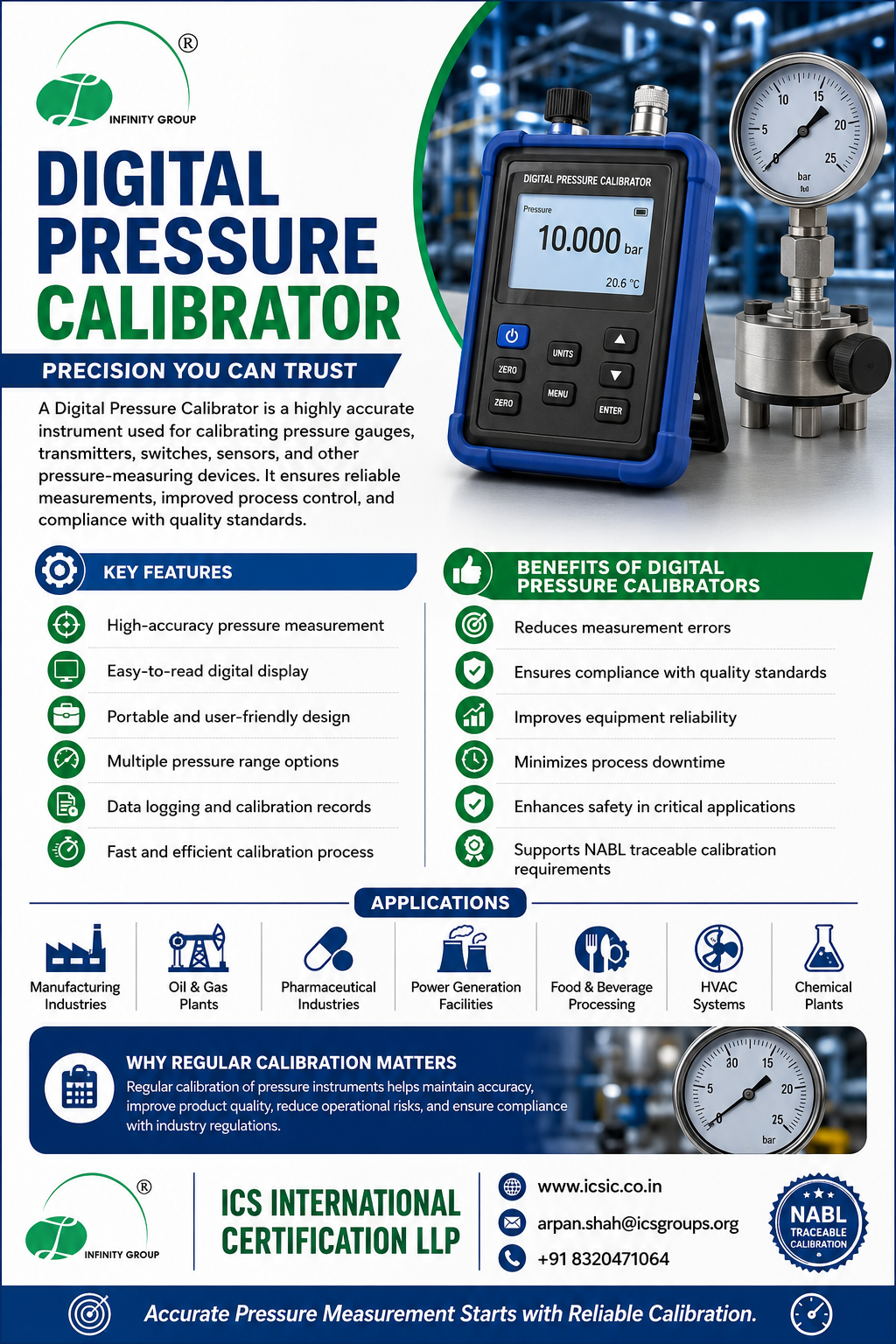
A Digital Pressure Calibrator is a high-accuracy instrument used to calibrate and verify pressure gauges, transmitters, switches, and sensors. It ensures reliable pressure measurements, helping industries maintain quality, safety, and compliance with international standards.
✅ Key Features:
• High Accuracy & Stability
• Easy-to-Read Digital Display
• Wide Pressure Measurement Range
• Data Logging & Calibration Records
• Portable and User-Friendly Design
• Suitable for Field and Laboratory Calibration
🏭 Applications:
• Manufacturing Industries
• Oil & Gas Plants
• Pharmaceutical Companies
• Power Generation Facilities
• Food & Beverage Industries
• Calibration Laboratories
📈 Benefits:
✔ Improved Measurement Accuracy
✔ Reduced Process Errors
✔ Compliance with ISO & NABL Requirements
✔ Enhanced Equipment Reliability
✔ Faster and More Efficient Calibration
Why Choose Professional Calibration?
Regular calibration ensures your pressure instruments perform accurately, minimizes downtime, and supports quality management systems such as ISO 9001.
🌐 www.icsic.co.in
📧 arpan.shah@icsgroups.org
📞 +91 8320471064
ICS International Certification LLP
Certification | Calibration | Inspection | Training | Consulting Services