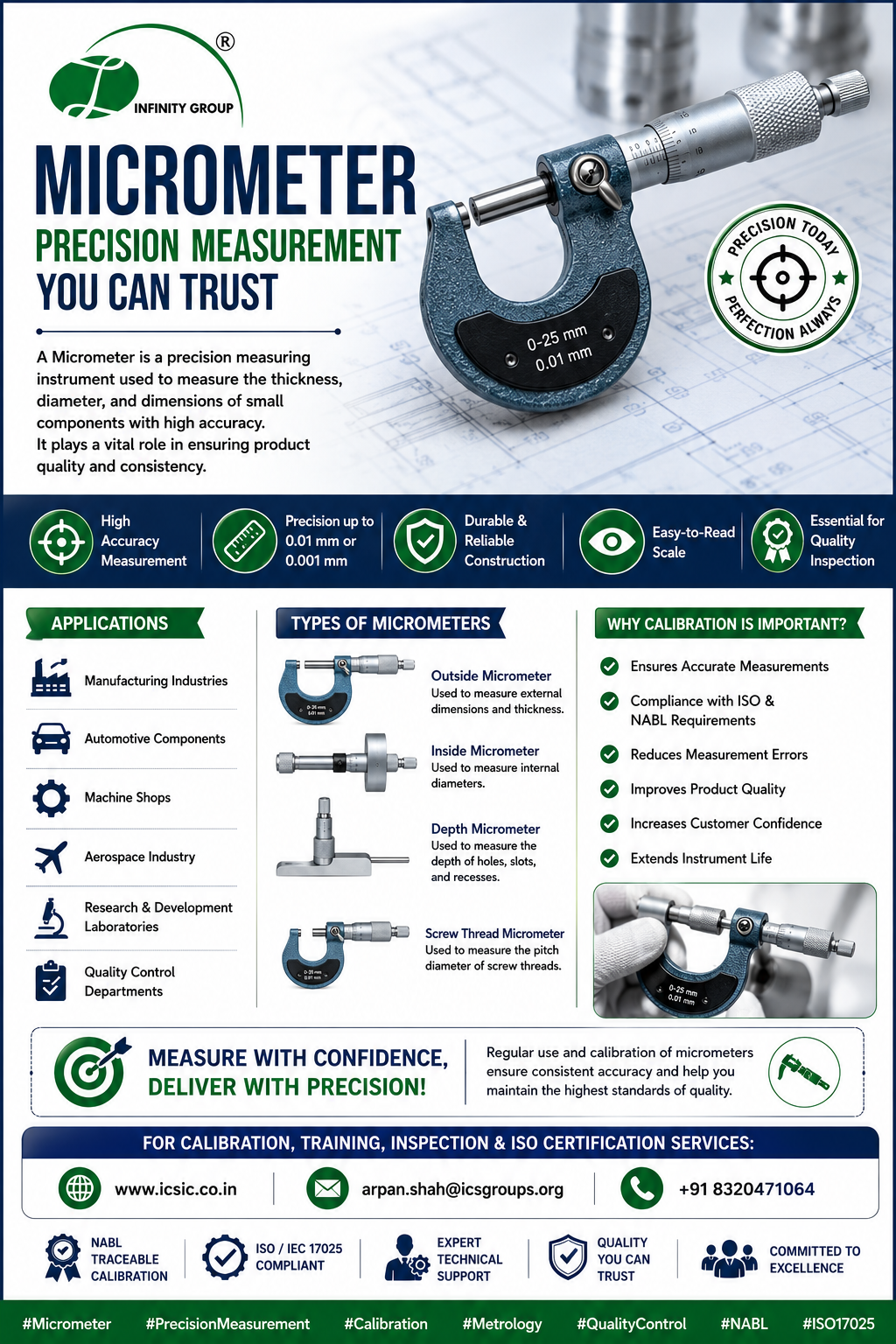
A Micrometer is a highly accurate measuring instrument used to measure the thickness, diameter, and dimensions of small components with exceptional precision. It is widely used in manufacturing, engineering, automotive, and quality control industries.
Key Features of a Micrometer
✅ High Accuracy Measurement
✅ Precision up to 0.01 mm or 0.001 mm
✅ Durable and Reliable Construction
✅ Easy-to-Read Scale
✅ Essential for Quality Inspection
Applications
🔹 Manufacturing Industries
🔹 Automotive Components
🔹 Machine Shops
🔹 Aerospace Industry
🔹 Research & Development Laboratories
🔹 Quality Control Departments
Why Calibration is Important?
Regular calibration of micrometers ensures:
✔ Accurate Measurements
✔ Compliance with ISO & NABL Requirements
✔ Reduced Measurement Errors
✔ Improved Product Quality
✔ Increased Customer Confidence
📏 Measure with Confidence, Deliver with Precision!
For Calibration, Training, Inspection & ISO Certification Services:
🌐 www.icsic.co.in
📧 arpan.shah@icsgroups.org
📞 +91 8320471064
#Micrometer #PrecisionMeasurement #Calibration #Metrology #QualityControl #Manufacturing #NABL #ISO17025 #MeasurementAccuracy #IndustrialCalibration #QualityAssurance #ICSGroupOfCompanies