By ICS International Certification LLP
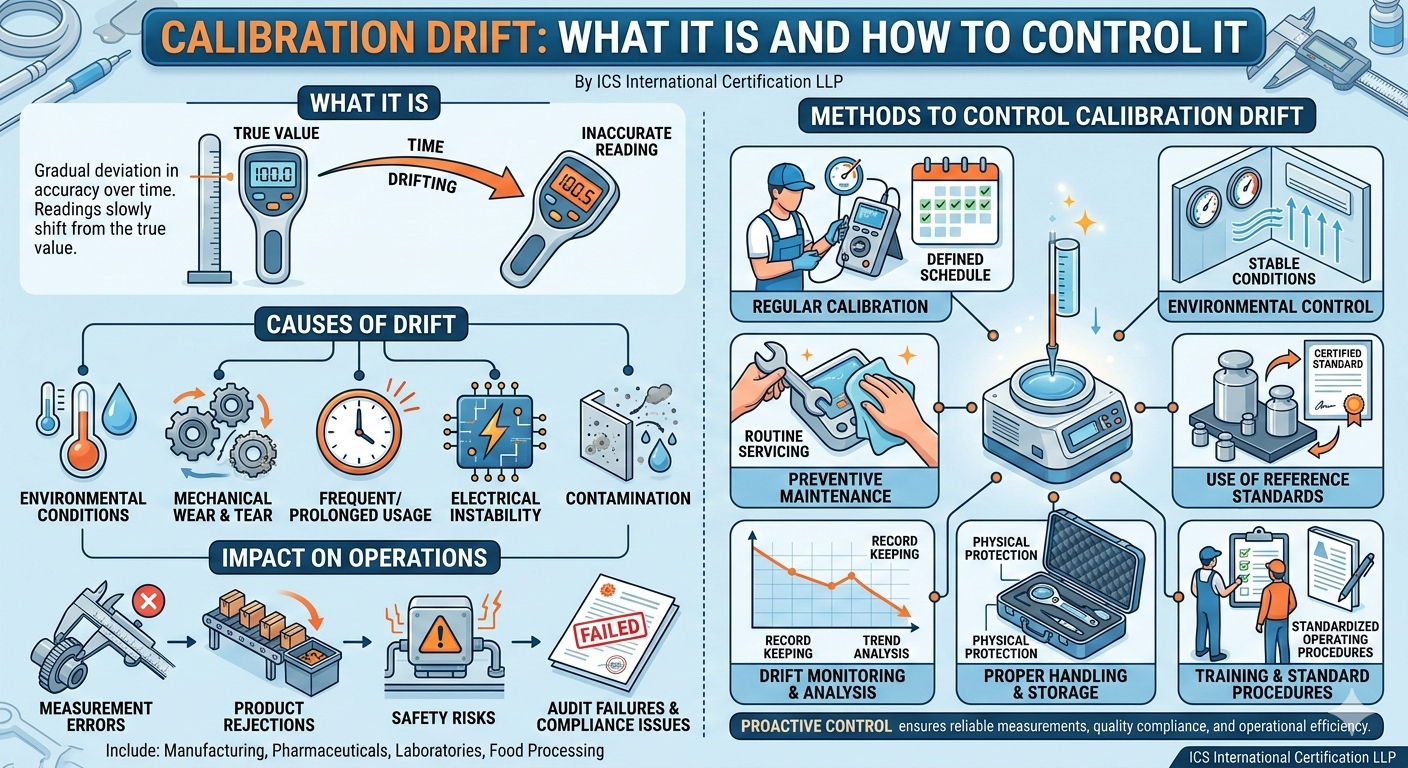
Calibration drift refers to the gradual deviation in the accuracy of a measuring instrument over time. Even when equipment is used correctly and appears to function normally, its readings may slowly shift away from the true value, leading to inaccurate measurements.
This phenomenon is common across industries that rely on precision instruments, including manufacturing, pharmaceuticals, food processing, and laboratories. If not properly managed, calibration drift can impact product quality, regulatory compliance, and overall operational efficiency.
Causes of Calibration Drift
Calibration drift can occur due to several factors, including environmental conditions such as temperature and humidity fluctuations, mechanical wear and tear, frequent or prolonged usage, electrical instability, and contamination from dust or chemicals. Over time, these influences alter the internal characteristics of measuring devices.
Impact on Operations
Uncontrolled drift can result in measurement errors, non-conformance with standards, increased rejection rates, and potential safety risks. In regulated environments, it may also lead to audit failures and compliance issues.
Methods to Control Calibration Drift
- Regular Calibration
Establish and follow a defined calibration schedule based on equipment usage, criticality, and manufacturer recommendations. - Environmental Control
Maintain stable environmental conditions to minimize external influences on sensitive instruments. - Preventive Maintenance
Conduct routine cleaning, inspection, and servicing to ensure instruments remain in optimal condition. - Use of Reference Standards
Verify instrument accuracy against certified reference standards to maintain traceability. - Drift Monitoring and Analysis
Keep records of calibration results and analyze trends over time to identify early signs of drift. - Proper Handling and Storage
Protect instruments from physical damage, improper usage, and unsuitable storage conditions. - Training and Standard Procedures
Ensure personnel are trained and follow standardized operating procedures for consistent usage.