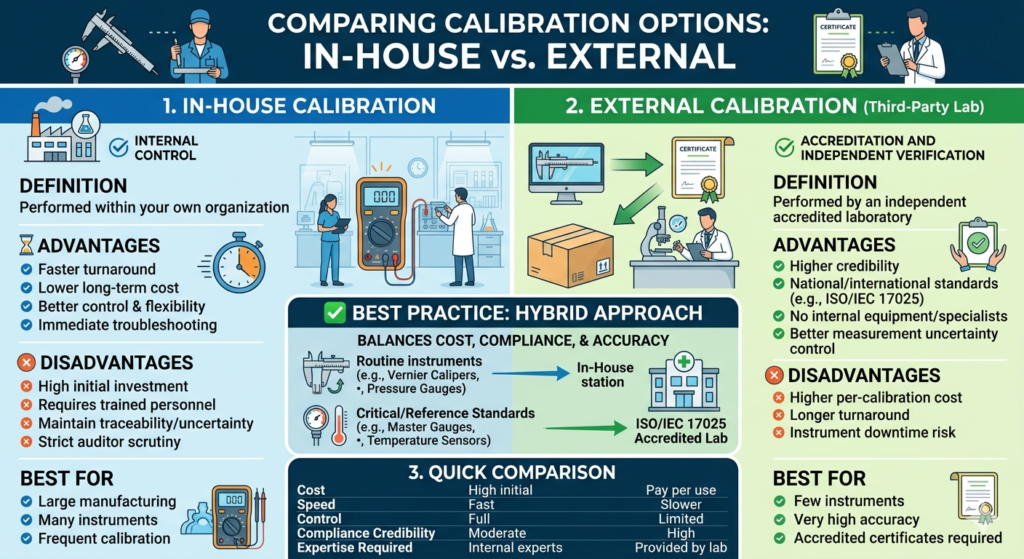
Calibration is essential for ensuring the accuracy and reliability of measuring instruments used in manufacturing, laboratories, and quality control processes. Organizations generally choose between in-house calibration and external calibration by accredited laboratories.
In-House Calibration
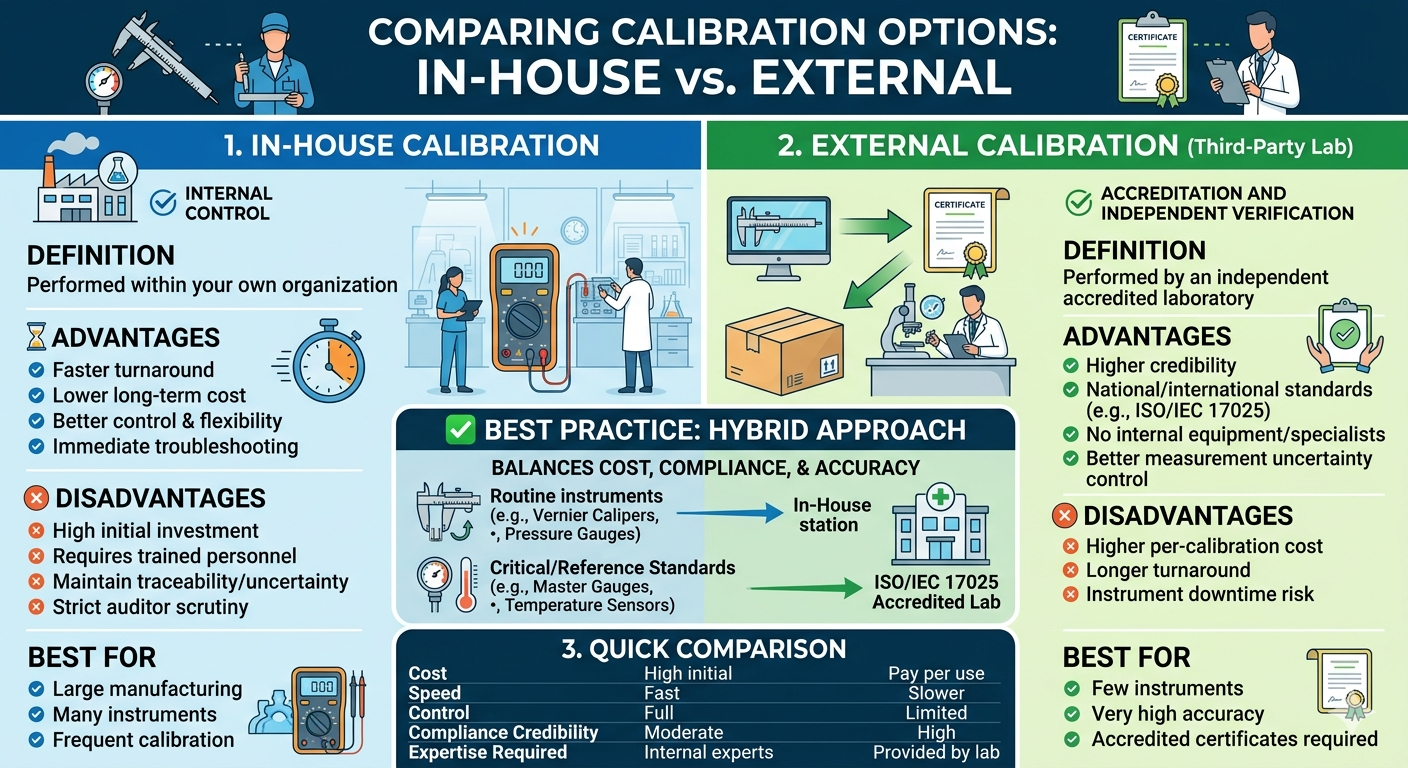
In-house calibration is performed within the organization using internal equipment and trained personnel.
Benefits:
- Faster calibration with minimal equipment downtime
- Better control over scheduling and processes
- Cost-effective for companies with a large number of instruments
Limitations:
- Requires investment in calibration standards and equipment
- Skilled staff and proper documentation are necessary
- Traceability to national or international standards must be maintained
External Calibration
External calibration is conducted by independent laboratories, often accredited according to international standards.
Benefits:
- High credibility and acceptance during audits
- Traceability to national or international standards
- No need for internal calibration equipment or specialized staff
Limitations:
- Higher cost per calibration
- Possible delays due to transportation and lab scheduling
Which Option Is Better?
The best approach for most organizations is a hybrid model. Routine instruments can be calibrated internally, while critical or reference instruments should be calibrated by accredited external laboratories to ensure higher accuracy and compliance.
At ICS International Certification LLP, we help organizations strengthen their quality systems by ensuring proper calibration practices aligned with international standards.