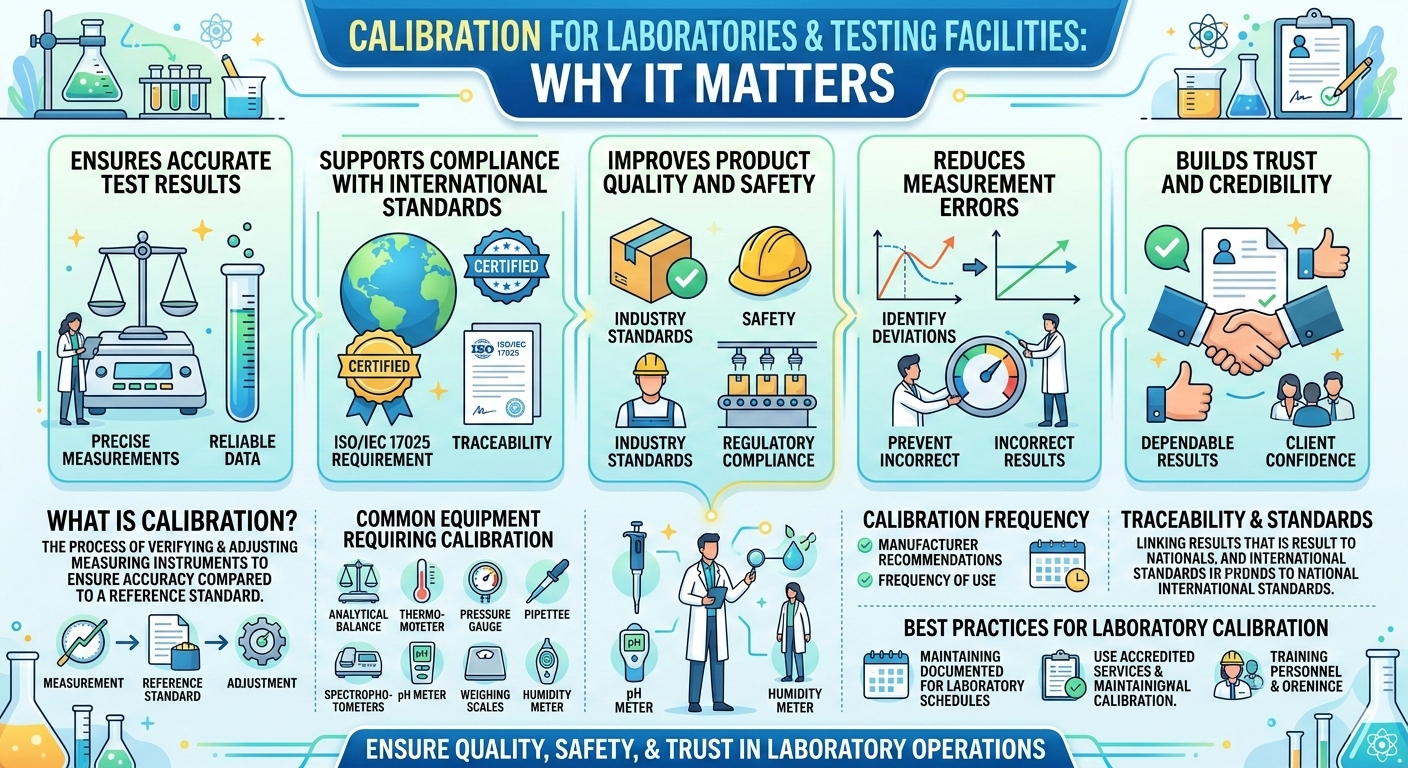
Calibration is essential for laboratories and testing facilities to ensure accurate and reliable measurement results. It is the process of comparing measuring instruments with recognized standards to verify their accuracy and performance.
Regular calibration helps laboratories maintain consistency in testing, reduce measurement errors, and comply with international quality standards such as ISO/IEC 17025.
Laboratory equipment like balances, thermometers, pipettes, pressure gauges, and pH meters must be calibrated periodically to maintain precision and reliability. Proper calibration also improves product quality, ensures regulatory compliance, and increases confidence in laboratory results.
By implementing proper calibration practices, laboratories can maintain high standards of accuracy and credibility in their testing processes. ICS International Certification LLP supports organizations in achieving quality compliance and strengthening their laboratory management systems.