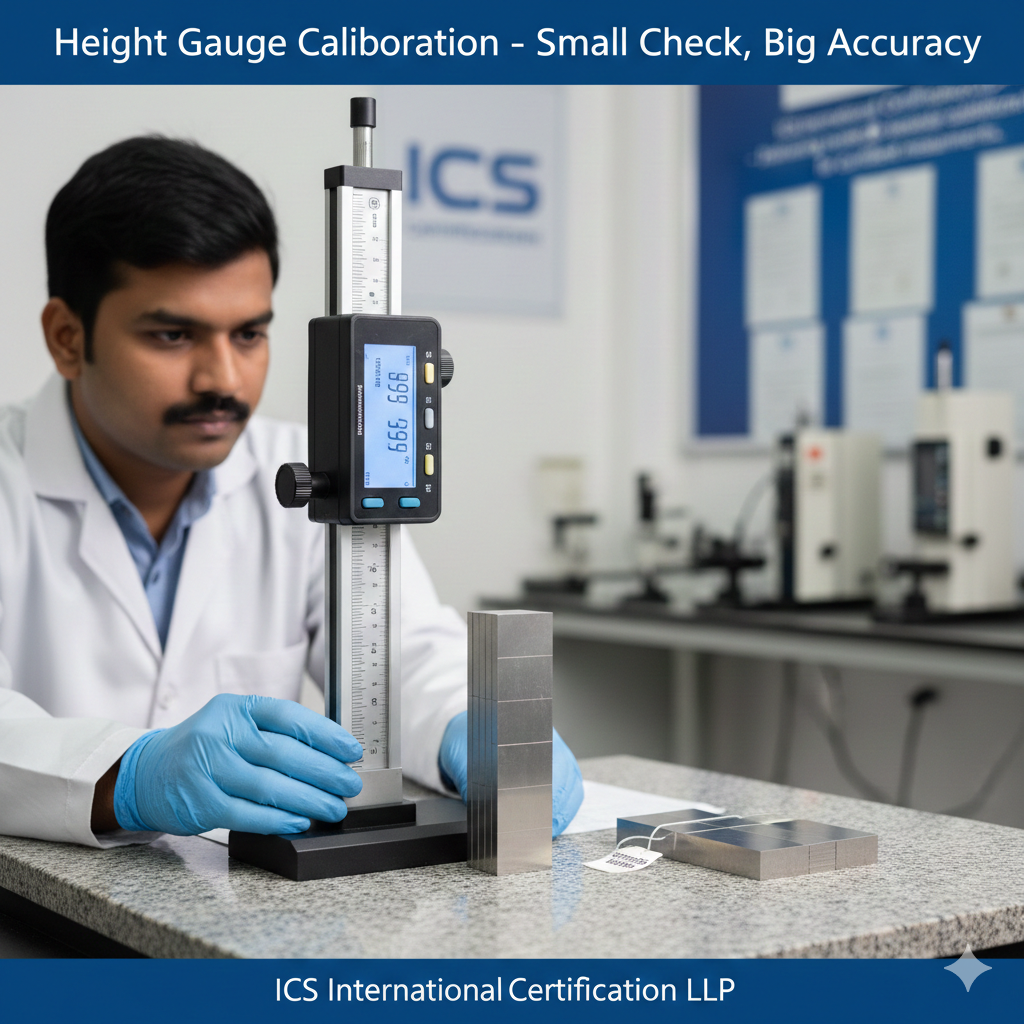
A Height Gauge is widely used in inspection and production areas to measure heights, steps, and marking dimensions on a surface plate. If the instrument is not calibrated, even a tiny error can lead to wrong measurements, product rejection, and customer complaints.
Height Gauge Calibration is the process of comparing the instrument with certified master standards like Slip Gauges under controlled conditions. This confirms that the readings shown by the gauge are correct and traceable to national / international standards.
At ICS International Certification LLP, we verify:
- Measurement accuracy across the full range
- Repeatability and hysteresis (up & down variation)
- Probe alignment and base movement
- Digital / dial indication error
Regular calibration helps maintain product quality, supports ISO audit compliance, and reduces manufacturing losses.
Recommended Frequency: Once every 12 months or as per usage.
ICS International Certification LLP – Delivering trusted and traceable calibration for confident measurements.