By ICS International Certification LLP
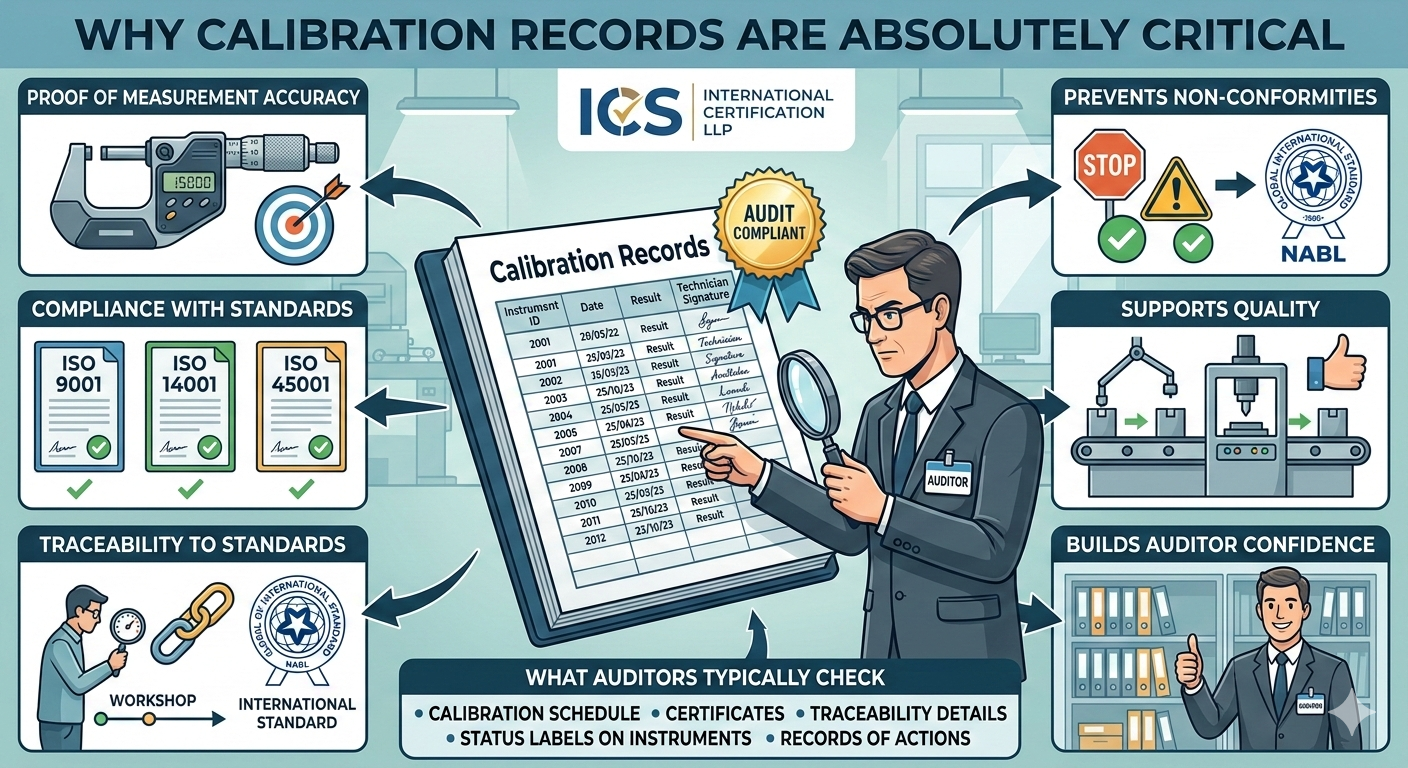
1. Proof of Measurement Accuracy
Calibration records demonstrate that your instruments are giving accurate and reliable results. Without this, any data you produce (quality checks, test results, inspections) becomes questionable.
2. Compliance with Standards
Standards like ISO 9001, ISO 14001, and ISO 45001 require proper control of monitoring and measuring equipment.
Calibration records are the documented evidence that you meet these clauses.
3. Traceability to National/International Standards
Good calibration records show traceability to recognized standards (like NABL or international bodies). This ensures your measurements are globally acceptable, which auditors specifically check.
4. Prevents Non-Conformities
Missing, expired, or incomplete calibration records are among the most common audit non-conformities.
A simple gap—like a missed calibration date—can lead to:
- Major non-conformity
- Audit failure or delay
- Loss of certification credibility
5. Supports Product & Service Quality
If your instruments aren’t calibrated:
- Measurements can drift
- Defects go unnoticed
- Customer complaints increase
Calibration records prove that your quality control process is trustworthy.
6. Helps in Root Cause Analysis
When something goes wrong, auditors often trace back to measurement systems. Calibration history helps you:
- Identify faulty instruments
- Track when deviations started
- Take corrective action faster
7. Builds Auditor Confidence
Well-maintained calibration records show that your system is:
- Organized
- Controlled
- Consistently maintained
This creates a strong impression during audits conducted or supported by organizations like ICS International Certification LLP.
What Auditors Typically Check
- Calibration schedule and frequency
- Calibration certificates
- Traceability details
- Status labels on instruments
- Records of out-of-calibration actions
Bottom Line
Calibration records are not just paperwork—they are evidence of control, accuracy, and compliance. Without them, even a well-run system can fail an audit.