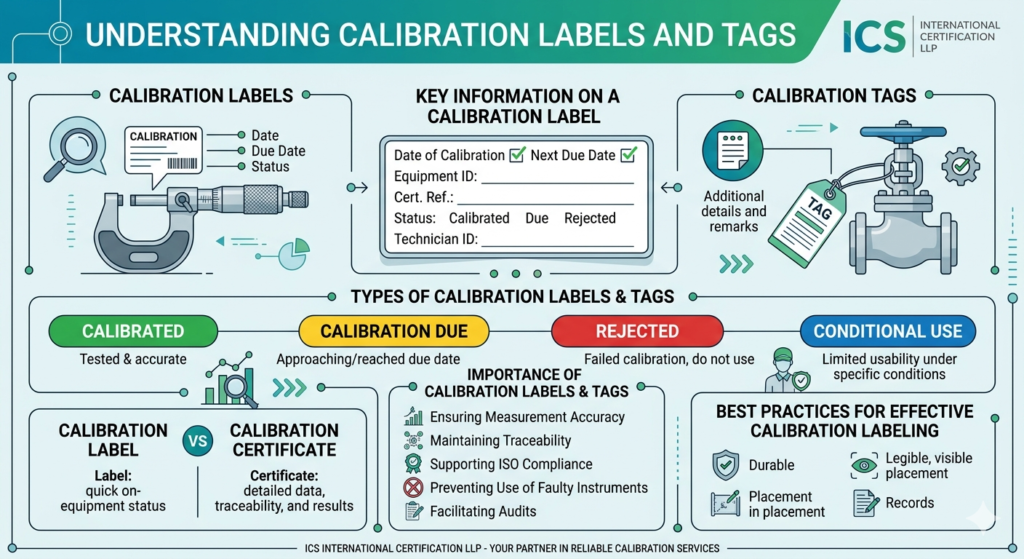
🏷️ Understanding Calibration Labels and Tags
In any industry where measurement accuracy is critical, calibration plays a vital role in ensuring reliability and compliance. One of the simplest yet most effective tools in this process is the use of calibration labels and tags.
At ICS INTERNATIONAL CERTIFICATION LLP, calibration labeling is an essential part of maintaining traceability and meeting international quality standards such as ISO requirements.
🔍 What Are Calibration Labels?
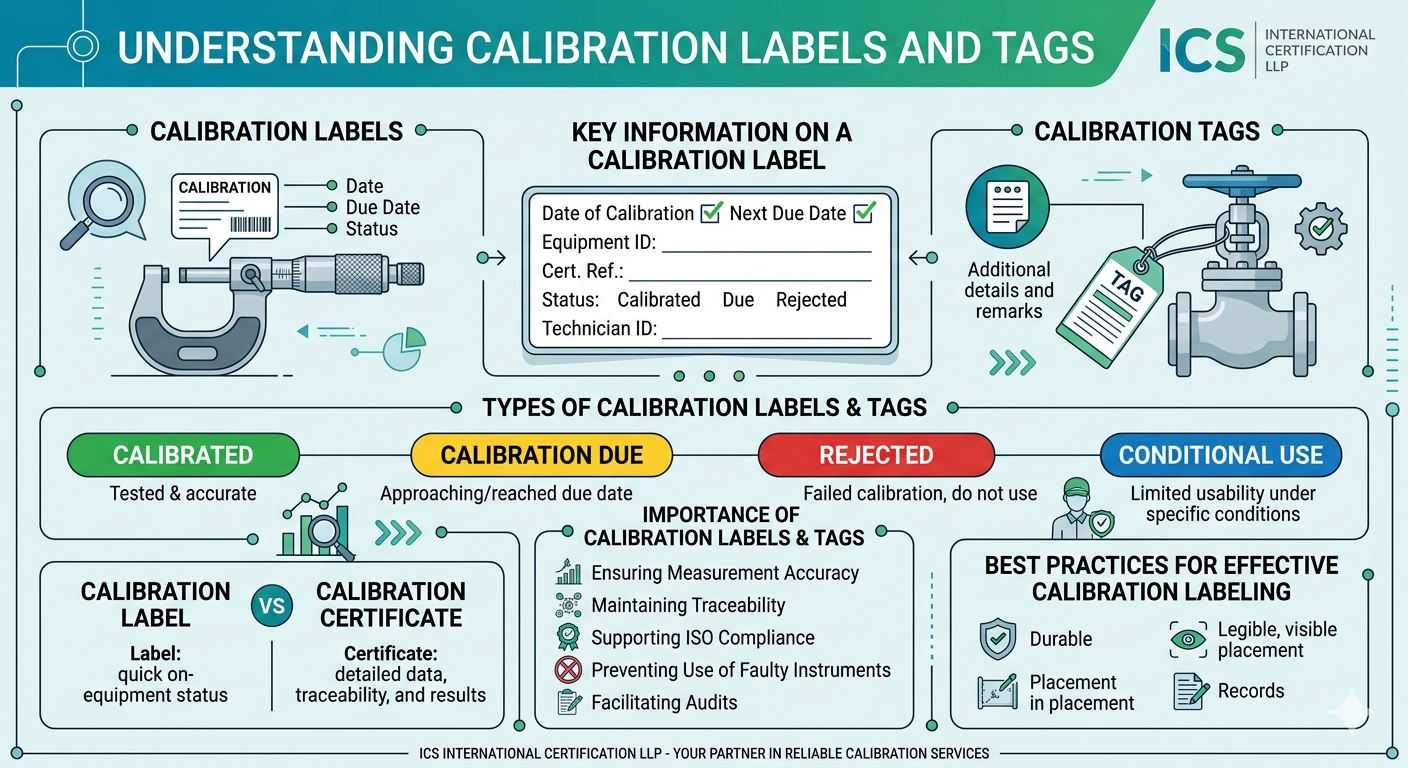
Calibration labels are identification stickers attached directly to instruments and equipment. These labels provide quick and clear information about the calibration status of the device, helping users instantly determine whether the equipment is fit for use.
Key Information on a Calibration Label:
- Date of calibration
- Next due date
- Equipment identification or serial number
- Calibration certificate reference
- Status (Calibrated, Due, or Rejected)
- Technician or laboratory identification
🏷️ What Are Calibration Tags?
Calibration tags serve a similar purpose but are typically used when labels cannot be directly applied to equipment. These tags are often attached using strings or wires and may contain more detailed information.
They are especially useful for:
- Large or irregular-shaped equipment
- Harsh environments where labels may not stick
- Situations requiring additional remarks or instructions
🟢 Types of Calibration Labels and Tags
1. Calibrated
Indicates that the equipment has been tested and meets required accuracy standards.
2. Calibration Due
Shows that the equipment is approaching or has reached its calibration due date.
3. Rejected / Out of Calibration
Marks equipment that has failed calibration and should not be used.
4. Conditional Use
Indicates limited usability under specific conditions.
🎯 Importance of Calibration Labels and Tags
Calibration labels and tags are not just identifiers—they are critical for quality assurance. Their importance includes:
- Ensuring measurement accuracy
- Maintaining traceability to national and international standards
- Supporting compliance with ISO and other regulatory requirements
- Preventing the use of faulty or out-of-calibration instruments
- Facilitating smooth audits and inspections
🛠️ Best Practices for Effective Calibration Labeling
To maximize effectiveness, organizations should follow these best practices:
- Use durable and tamper-evident labels
- Ensure all information is clear and legible
- Place labels in visible locations
- Maintain proper calibration records
- Replace damaged or missing labels immediately
📌 Calibration Label vs Calibration Certificate
While both are important, they serve different purposes:
- Calibration Label/Tag: Provides quick, on-equipment status information
- Calibration Certificate: Offers detailed calibration data, traceability, and measurement results