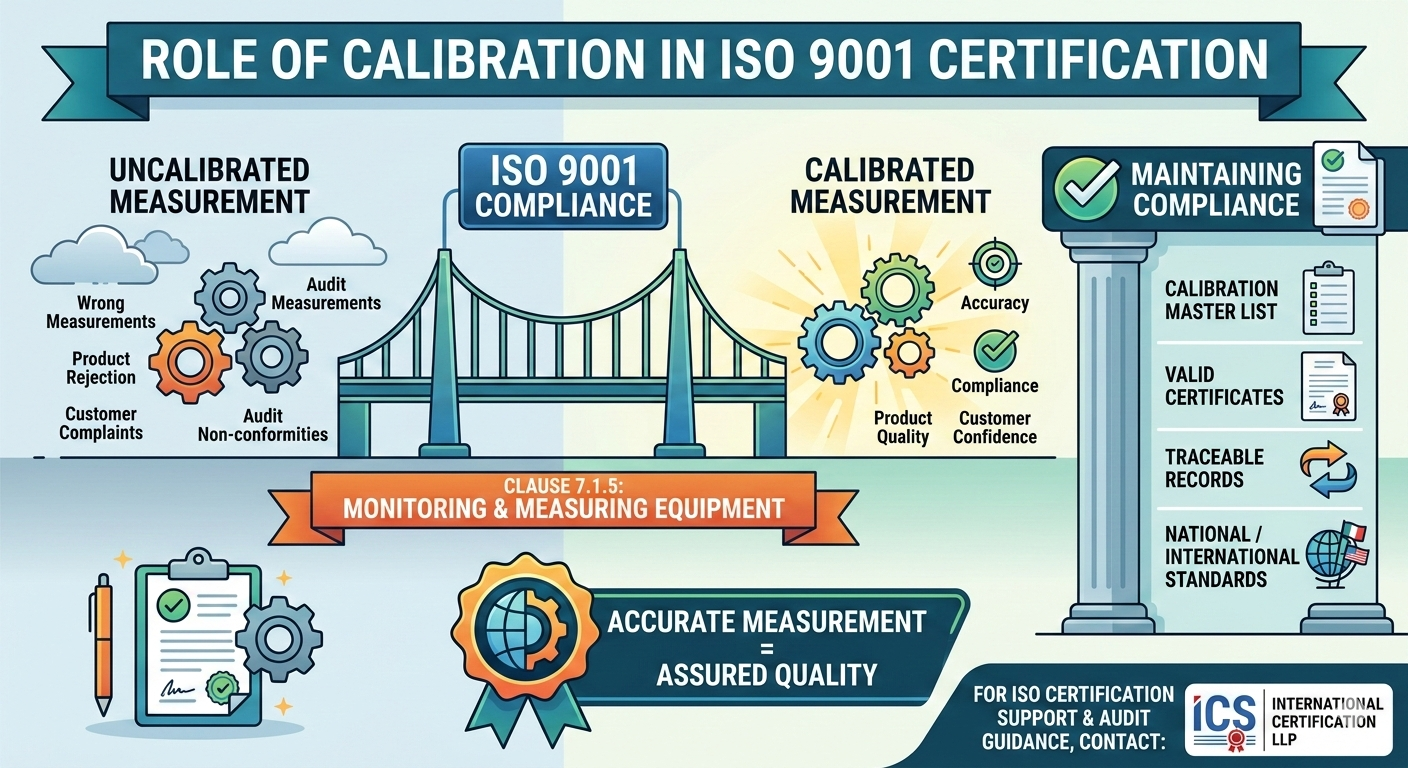
Calibration plays a vital role in achieving and maintaining ISO 9001 certification. As per Clause 7.1.5, organizations must ensure that all monitoring and measuring equipment is properly calibrated, traceable to national or international standards, and supported with valid records.

Uncalibrated instruments can lead to wrong measurements, product rejection, customer complaints, and audit non-conformities. Proper calibration ensures accuracy, product quality, and compliance during ISO audits.

Maintaining a calibration master list, valid certificates, and traceable records strengthens your quality management system and builds customer confidence.

For ISO certification support and audit guidance, contact ICS International Certification LLP.

Accurate Measurement = Assured Quality.
Leave a Reply

Your email address will not be published. Required fields are marked *

Explore More

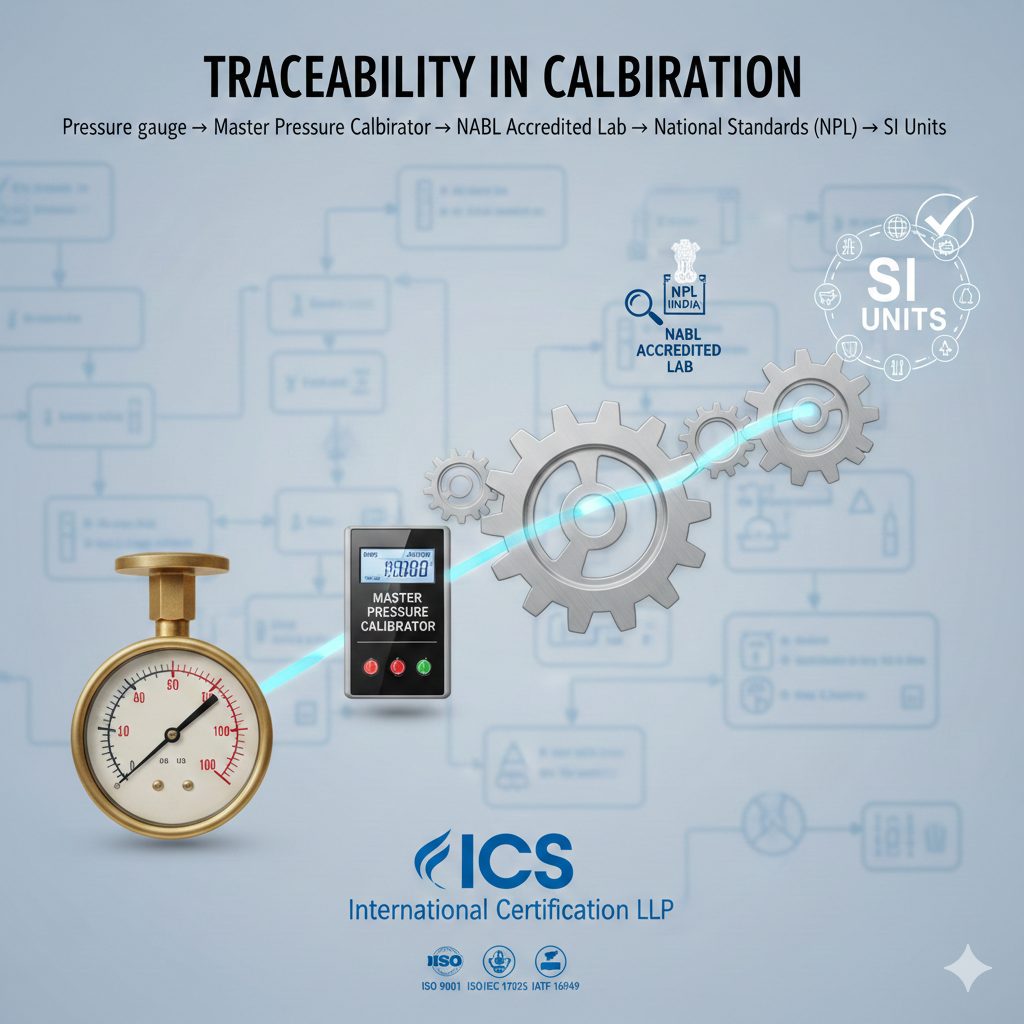
Traceability in Calibration

Traceability in calibration means the measurement of an instrument is linked to national or international standards through a continuous chain of comparisons with known uncertainty. It confirms that the readings

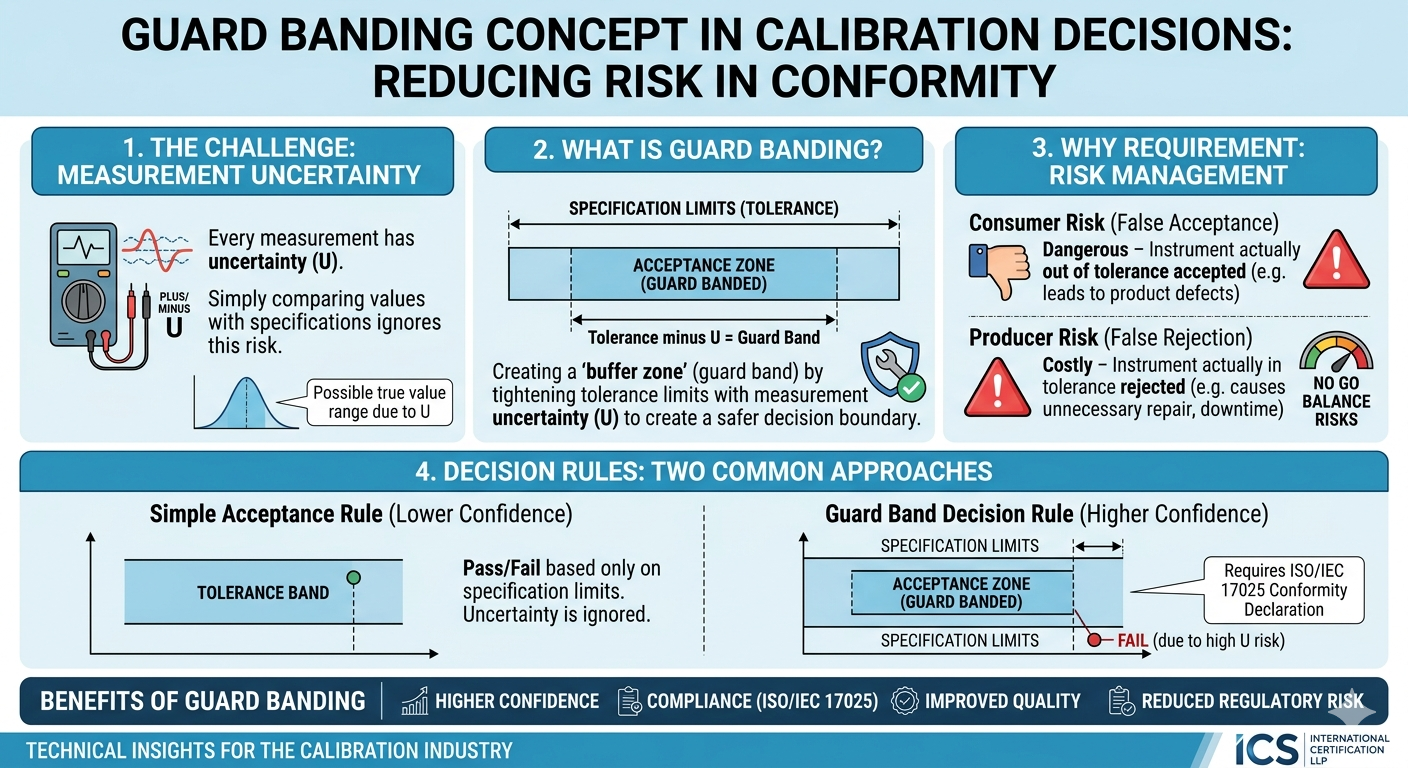
Guard Banding Concept in Calibration Decisions

Below is a detailed explanation of the Guard Banding Concept in Calibration Decisions, based on the metrology principles discussed in calibration resources and aligned with the type of technical explanations

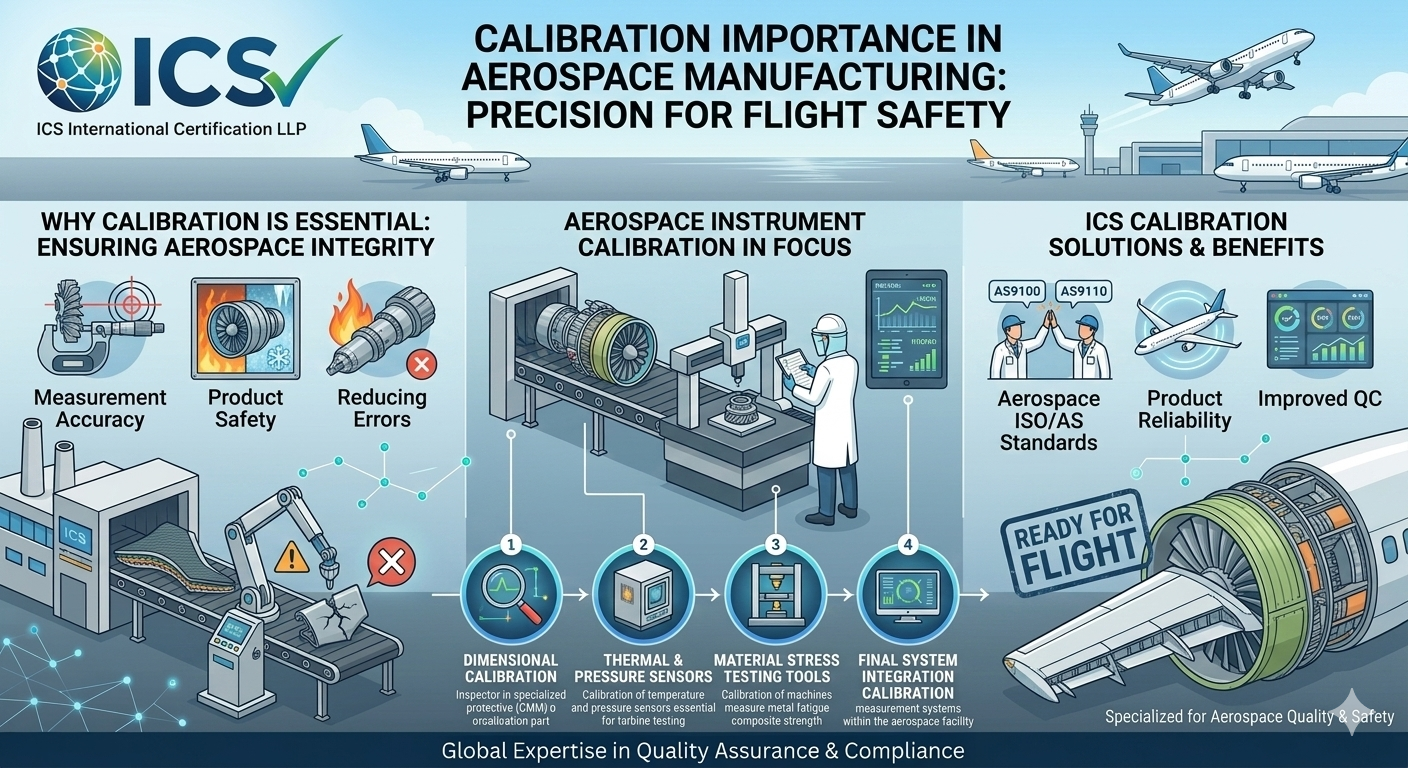
Calibration Importance in Aerospace Manufacturing

In the aerospace industry, precision and reliability are critical. Even the smallest measurement error can affect the performance, safety, and compliance of aircraft components. This is why calibration of measuring