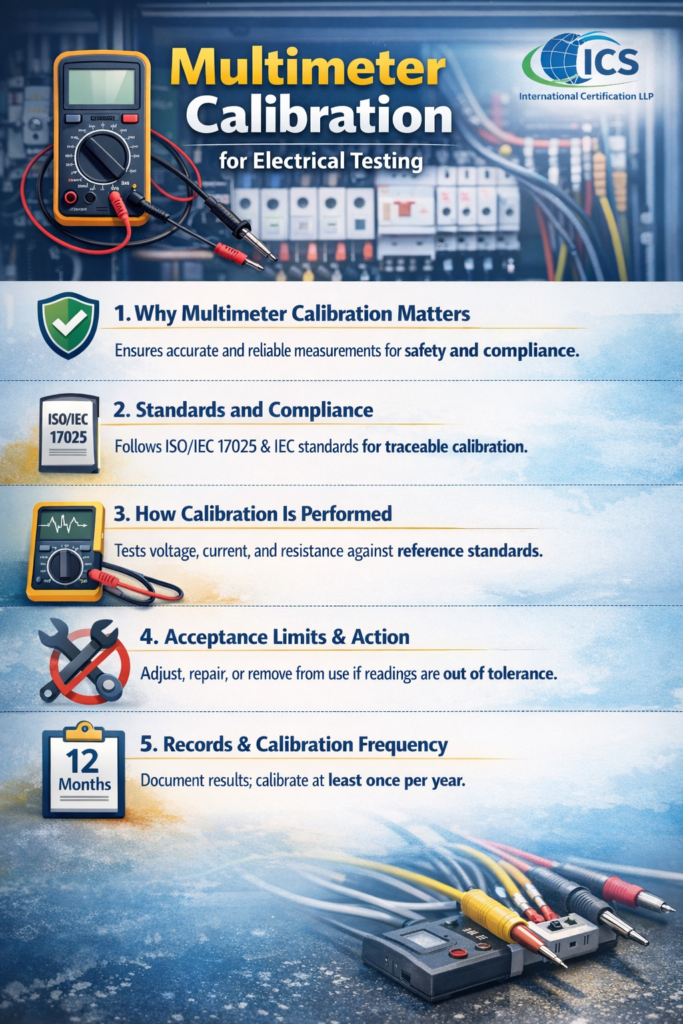
1. Why Multimeter Calibration Matters
A multimeter is one of the most essential tools in electrical testing. Accurate readings are critical for safety, compliance, and quality. Regular calibration ensures the instrument delivers reliable results and meets certification and audit expectations.
2. Standards and Compliance Requirements
Multimeter calibration should follow recognized international standards such as ISO/IEC 17025 and IEC guidelines. These standards ensure measurements are traceable, consistent, and accepted across inspection, testing, and certification activities.
3. How Calibration Is Performed
Calibration involves comparing the multimeter’s readings with known reference values for voltage, current, and resistance. Tests are conducted under controlled environmental conditions to minimize errors and ensure repeatable results.
4. Acceptance Limits and Corrective Action
Once readings are taken, they are checked against the manufacturer’s tolerance limits. If the multimeter falls outside acceptable limits, it must be adjusted, repaired, or removed from use to prevent inaccurate testing.
5. Records and Calibration Frequency
Proper documentation is a key part of calibration. Records should include instrument details, test results, and traceability information. Most multimeters require calibration at least once every 12 months, depending on usage and operating conditions.