By ICS International Certification LLP
In modern manufacturing and testing environments, accurate measurements are essential for maintaining product quality and controlling operational costs. Calibration of measuring instruments plays a critical role in ensuring that measurement results are reliable, consistent, and traceable to recognized standards.
Ensuring Measurement Accuracy
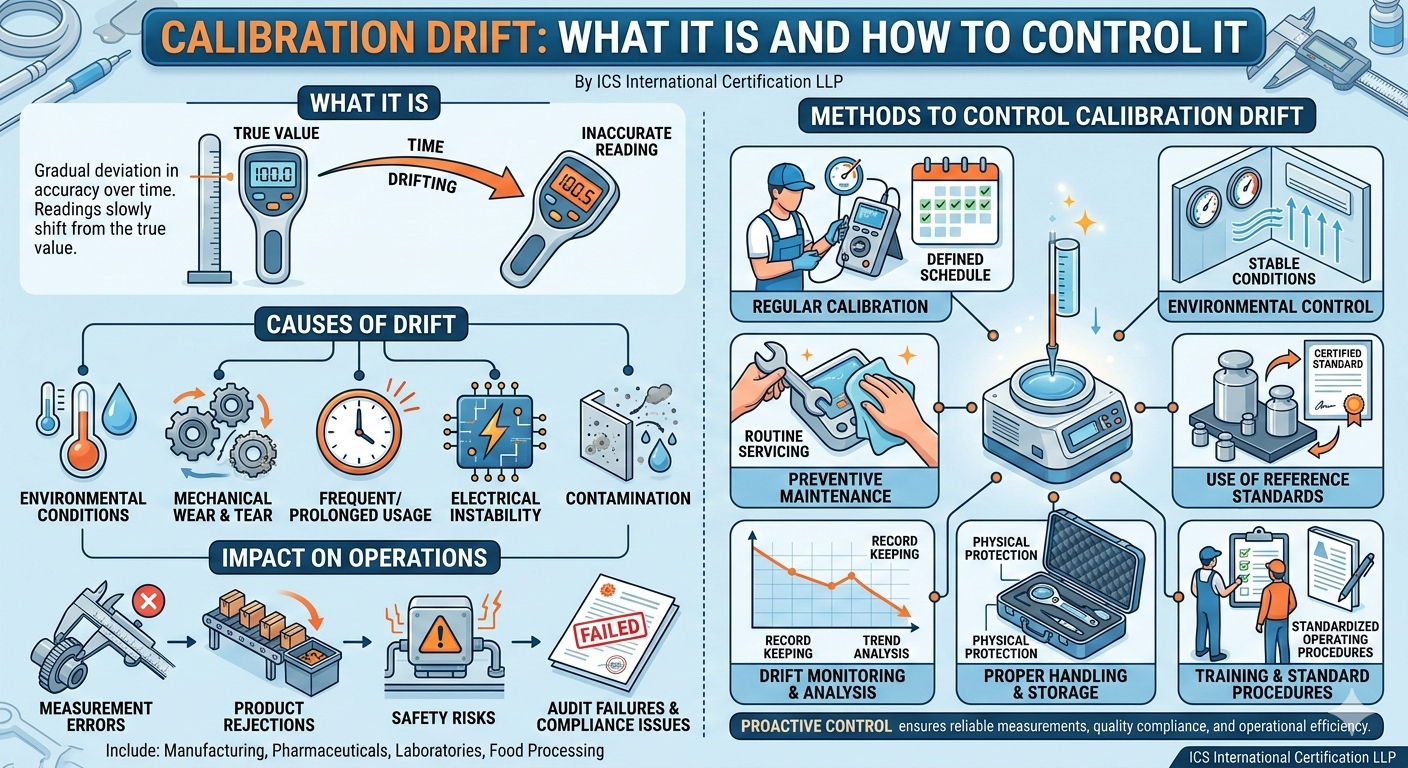
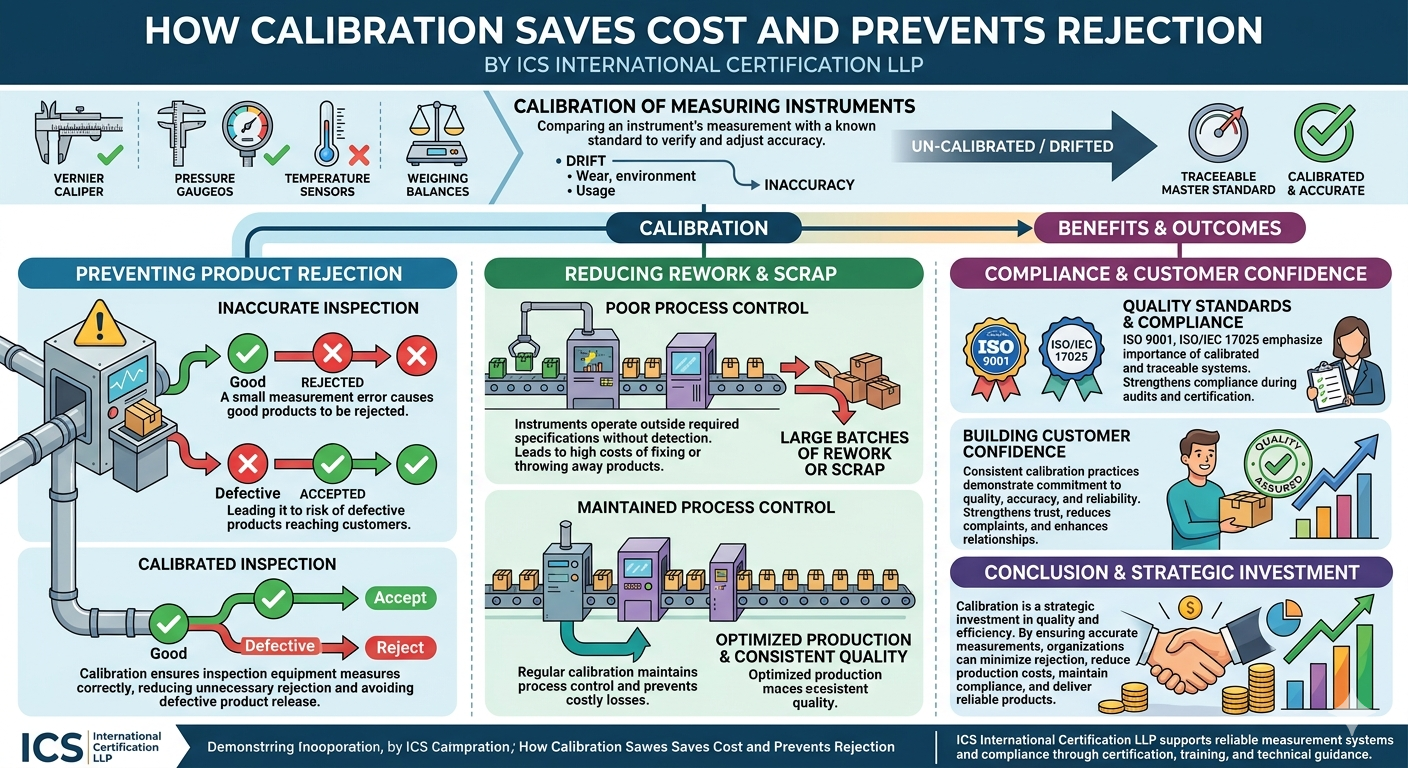
Calibration is the process of comparing an instrument’s measurement with a known standard to verify and adjust its accuracy. Over time, measuring instruments such as vernier calipers, pressure gauges, temperature sensors, and weighing balances may drift from their original accuracy due to wear, environmental conditions, or regular usage. Regular calibration ensures that instruments continue to provide precise readings, helping organizations make correct quality decisions.
Preventing Product Rejection
Inaccurate instruments can lead to incorrect inspection results. A small measurement error may cause good products to be rejected or defective products to be accepted. Both situations are costly. Calibration ensures that inspection equipment measures correctly, thereby reducing unnecessary rejection and avoiding the risk of defective products reaching customers.
Reducing Rework and Scrap
When instruments are not properly calibrated, production processes may operate outside required specifications without being detected. This can result in large batches of products requiring rework or even being scrapped entirely. Regular calibration helps maintain process control and prevents such costly losses.
Supporting Quality Standards and Compliance
International quality standards such as ISO 9001 and ISO/IEC 17025 emphasize the importance of calibrated and traceable measurement systems. Organizations that follow proper calibration practices not only improve product quality but also strengthen their compliance during audits and certification processes.
Building Customer Confidence
Consistent calibration practices demonstrate a company’s commitment to quality, accuracy, and reliability. This strengthens customer trust, reduces complaints, and enhances long-term business relationships.
Conclusion
Calibration is not merely a technical requirement; it is a strategic investment in quality and efficiency. By ensuring accurate measurements, organizations can minimize rejection, reduce production costs, maintain compliance with international standards, and deliver reliable products to their customers.
ICS International Certification LLP supports organizations in achieving reliable measurement systems and compliance with international quality standards through professional certification, training, and technical guidance.