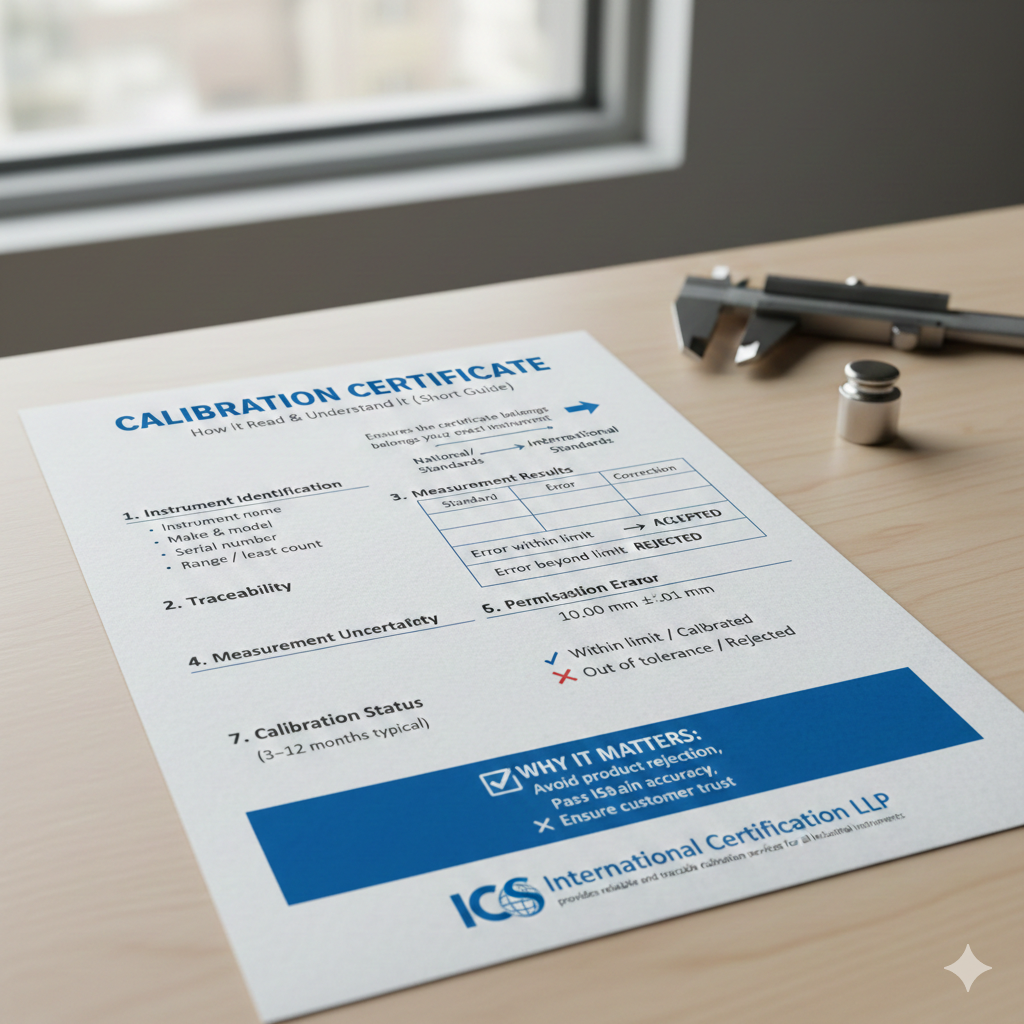
Calibration Certificate: How to Read & Understand It (Short Guide)
A calibration certificate confirms that your measuring instrument is accurate and traceable to standard references. It is essential for ISO audits, quality control, and customer confidence.
1. Instrument Identification
Check:
- Instrument name
- Make & model
- Serial number
- Range / least count
👉 Ensures the certificate belongs to your exact instrument.
2. Traceability
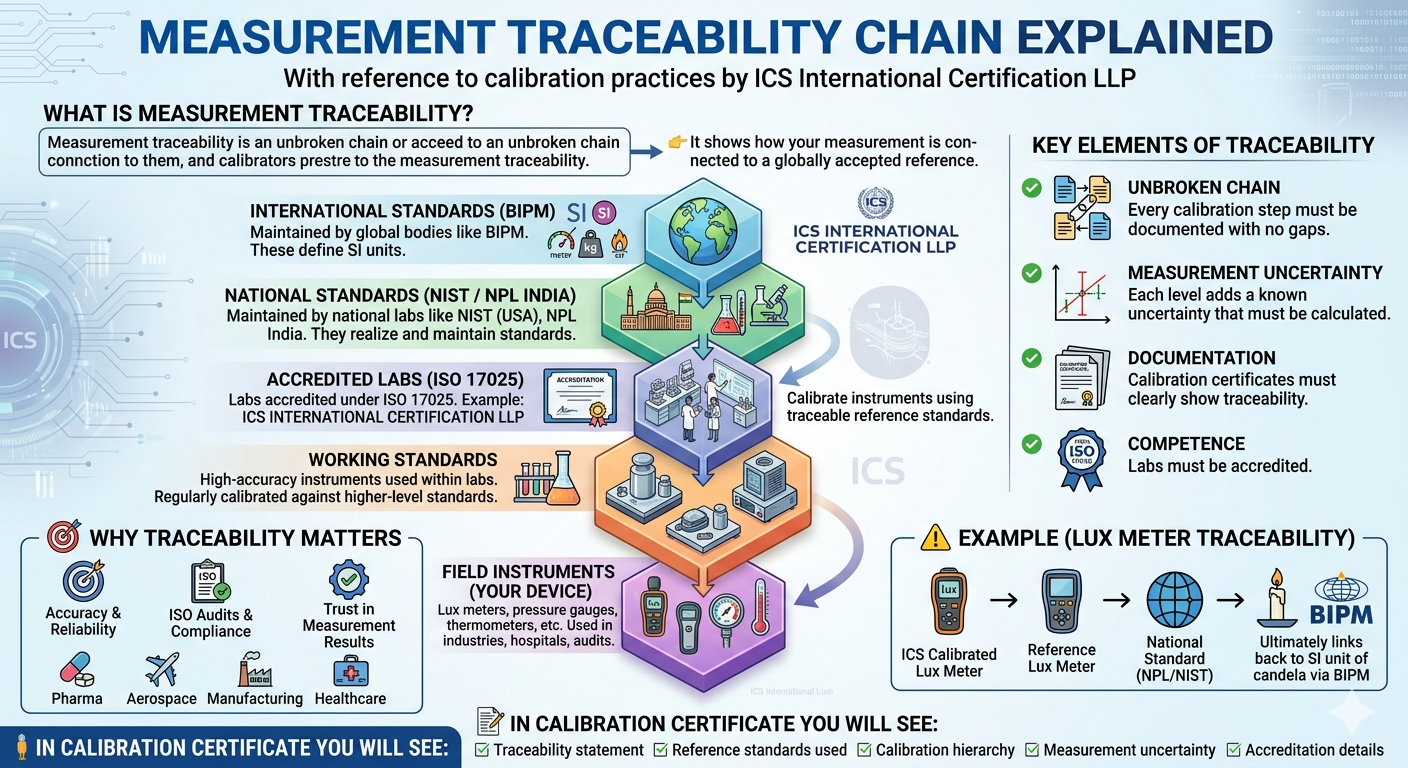
Shows reference standards used and linkage to national/international standards.
👉 Proves measurement reliability.
3. Measurement Results
Main table includes:
| Standard | Observed | Error | Correction |
|---|
- Error within limit → ACCEPTED
- Error beyond limit → REJECTED
4. Permissible Error
Maximum allowed deviation.
If error exceeds this → instrument cannot be used.
5. Measurement Uncertainty
Shows possible variation in result.
Example: 10.00 mm ± 0.01 mm
6. Calibration Status
Final decision:
✔ Within limit / Calibrated
✖ Out of tolerance / Rejected
7. Next Due Date
Indicates when recalibration is required (3–12 months typical).
Why It Matters
Reading a calibration certificate properly helps you:
- Avoid product rejection
- Pass ISO audits
- Maintain accuracy
- Ensure customer trust
ICS International Certification LLP provides reliable and traceable calibration services for all industrial instruments.