BY ICS INTERNATIONAL CERTIFICATION LLP
What is Measurement Traceability?
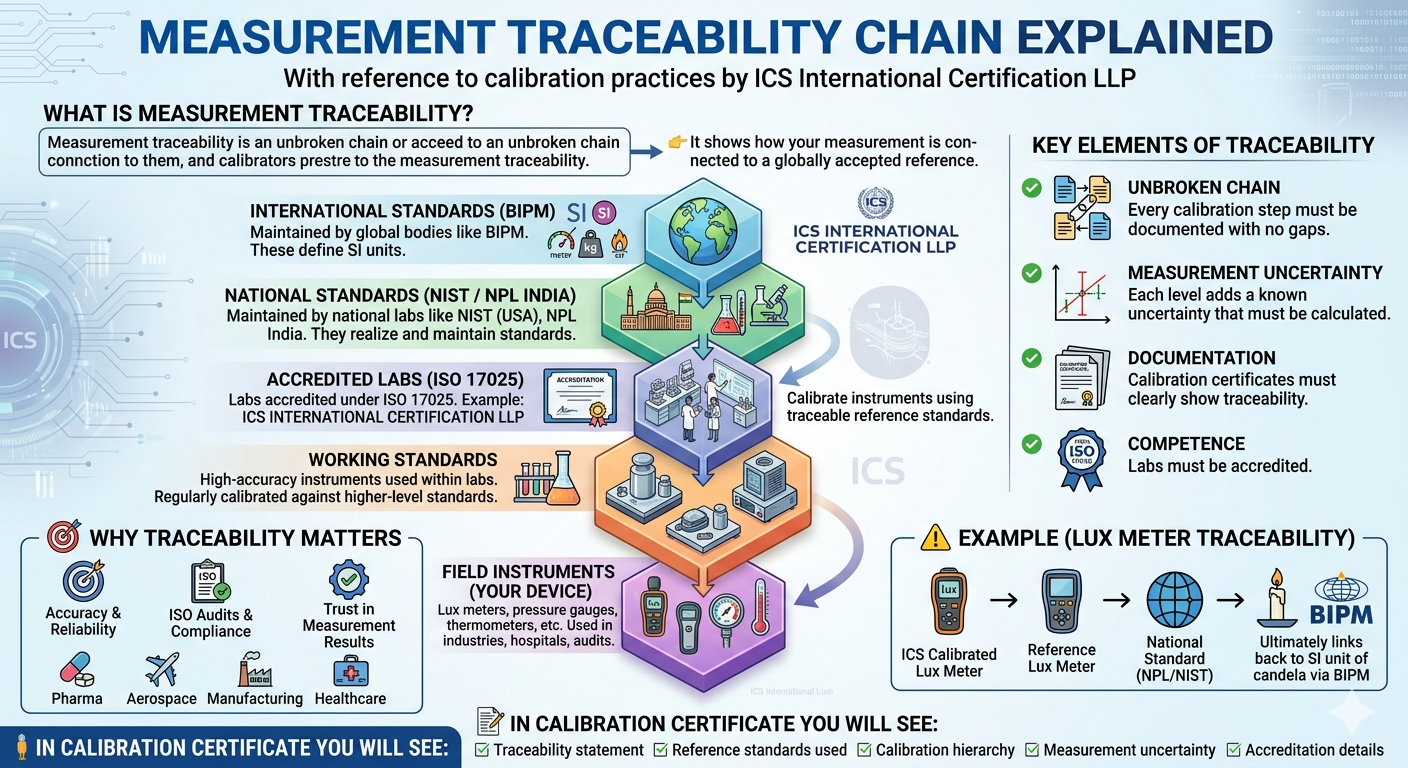
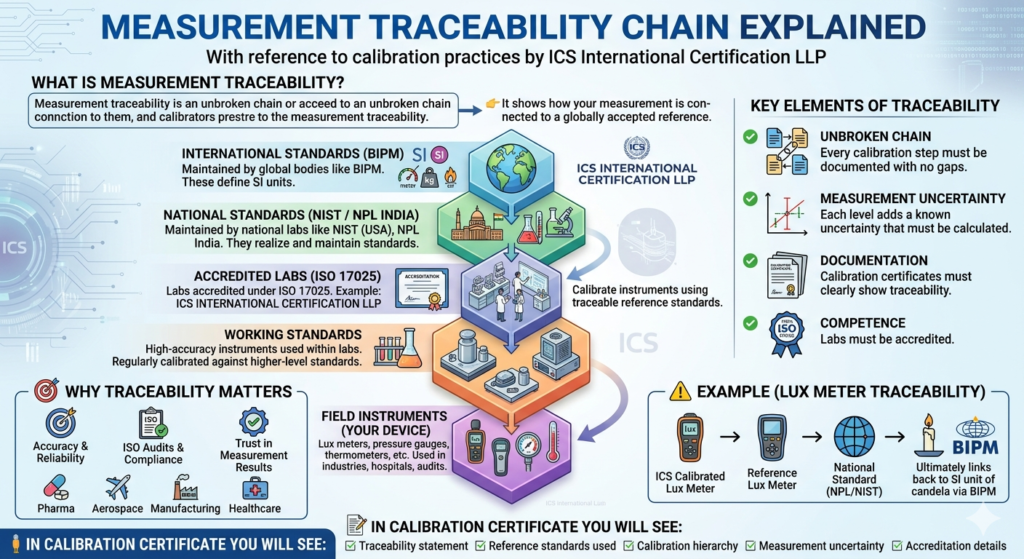
Measurement traceability is the unbroken chain of calibrations that links a measurement result back to a recognized national or international standard, each step having known uncertainties.
In simple terms:
👉 It shows how your measurement is connected to a globally accepted reference.
The Traceability Chain (Step-by-Step)
1. International Standards
Maintained by global bodies like:
- BIPM
These define SI units (meter, kilogram, candela, etc.)
2. National Standards
Maintained by national labs such as:
- NIST (USA)
- NPL India
They realize and maintain standards within a country.
3. Accredited Calibration Laboratories
Labs accredited under:
- ISO 17025
Example:
- ICS International Certification LLP
They calibrate instruments using reference standards traceable to national labs.
4. Working Standards
- High-accuracy instruments used within labs
- Regularly calibrated against higher-level standards
5. Field Instruments / User Equipment
- Lux meters, pressure gauges, thermometers, etc.
- Used in industries, hospitals, audits
Visual Representation
International Standards (BIPM)
        ↓
National Standards (NIST / NPL)
        ↓
Accredited Labs (ISO 17025)
        ↓
Working Standards
        ↓
Field Instruments (Your Device)
Key Elements of Traceability
Unbroken Chain
Every calibration step must be documented with no gaps.
Measurement Uncertainty
Each level adds a known uncertainty that must be calculated.
Documentation
Calibration certificates must clearly show traceability.
Competence
Labs must be accredited (e.g., ISO 17025).
Why Traceability Matters
- Ensures accuracy and reliability
- Required for ISO audits & compliance
- Builds trust in measurement results
- Essential for industries like:
- Pharma
- Aerospace
- Manufacturing
- Healthcare
Example (Lux Meter Traceability)
A lux meter calibrated by ICS International Certification LLP will have:
- Calibration against a reference lux meter
- That reference is calibrated against a national standard (NPL/NIST)
- Which ultimately links back to SI unit of candela via BIPM
In Calibration Certificate You Will See:
- Traceability statement
- Reference standards used
- Calibration hierarchy
- Measurement uncertainty
- Accreditation details