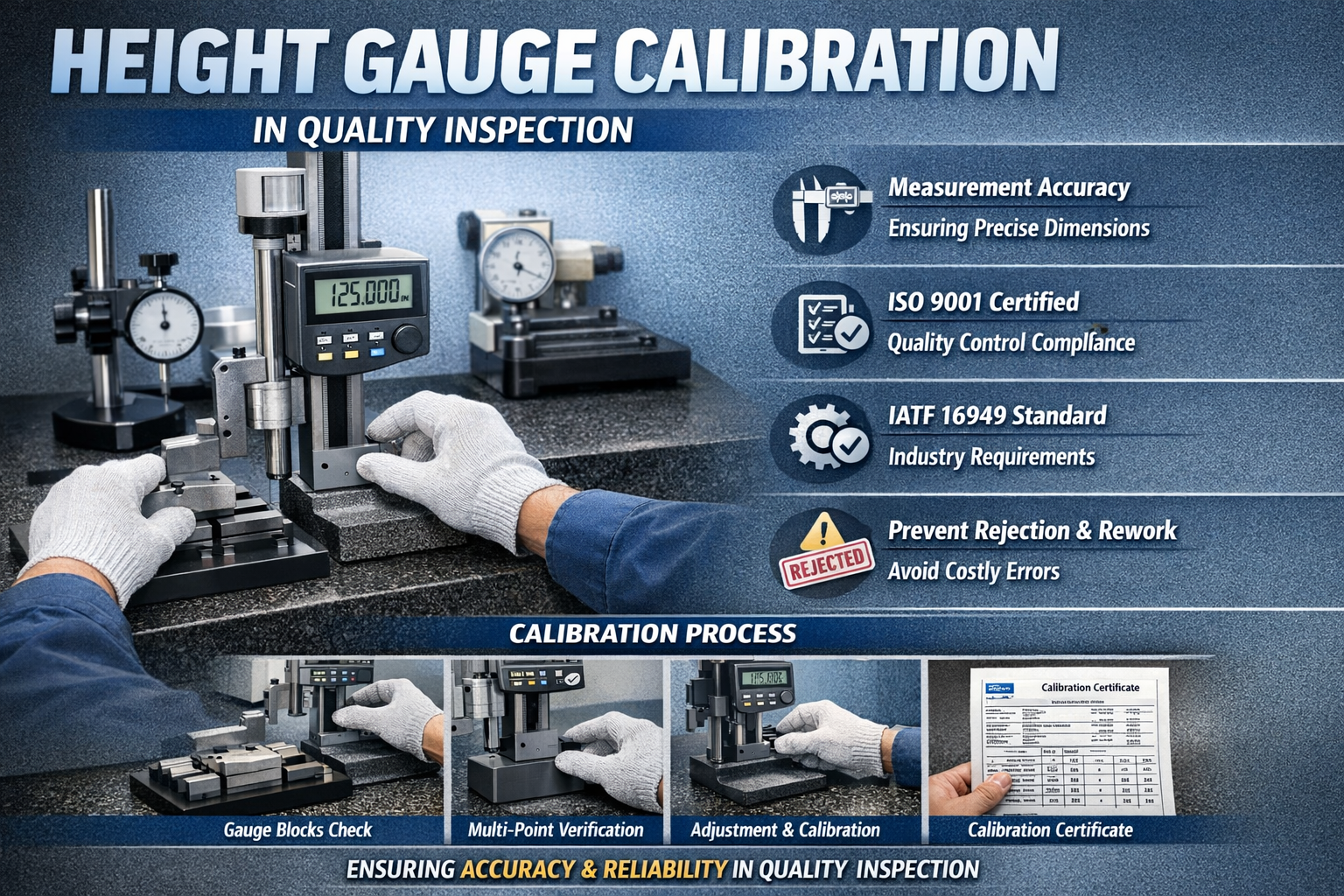
Height gauge calibration is essential in precision manufacturing and quality inspection. Since height gauges are widely used for measuring vertical dimensions, marking layouts, and checking component heights, their accuracy directly affects product quality.
🔍 Why Height Gauge Calibration is Important?
- Measurement Accuracy
Ensures precise dimensional inspection of machined components. - Quality Control Compliance
Supports quality management systems like ISO 9001 by maintaining calibrated measuring equipment. - Automotive & Engineering Standards
Helps meet industry requirements such as IATF 16949 for traceable measurements. - Prevents Rejection & Rework
Incorrect height readings can lead to batch rejection, customer complaints, and financial loss.
🛠️ How Height Gauge Calibration is Done?
- Cleaning of measuring surface and base
- Checking against certified slip gauges / gauge blocks
- Verification at multiple points across the measuring range
- Adjustment (if required)
- Issuance of calibration certificate with traceability
📅 Recommended Calibration Frequency
- Every 6–12 months
- After accidental drop or impact
- When measurement deviation is observed