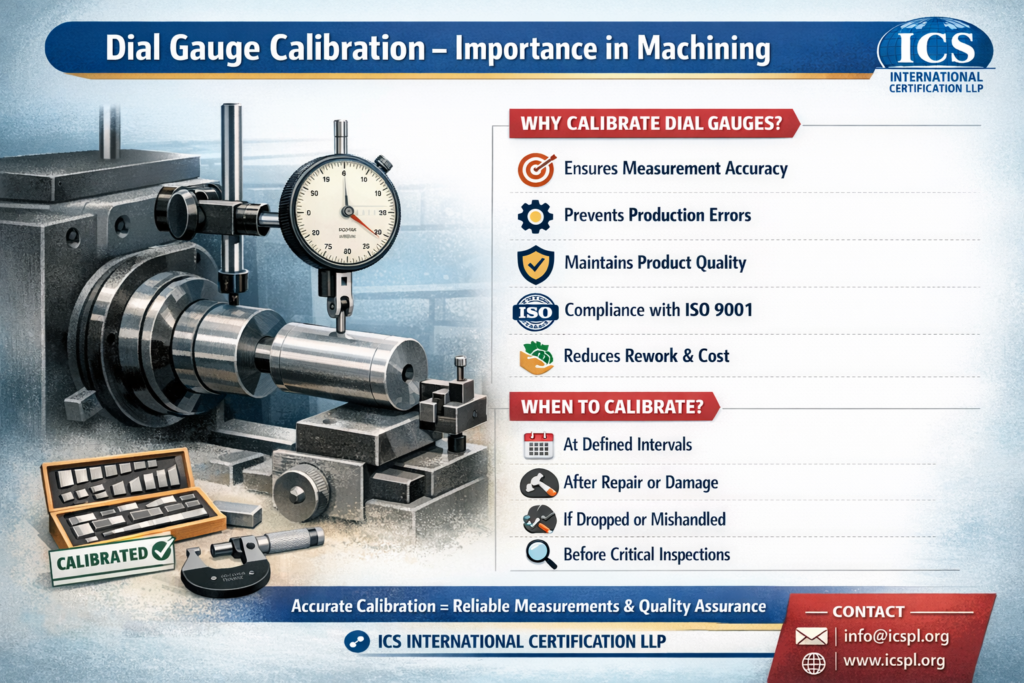
By ICS INTERNATIONAL CERTIFICATION LLP
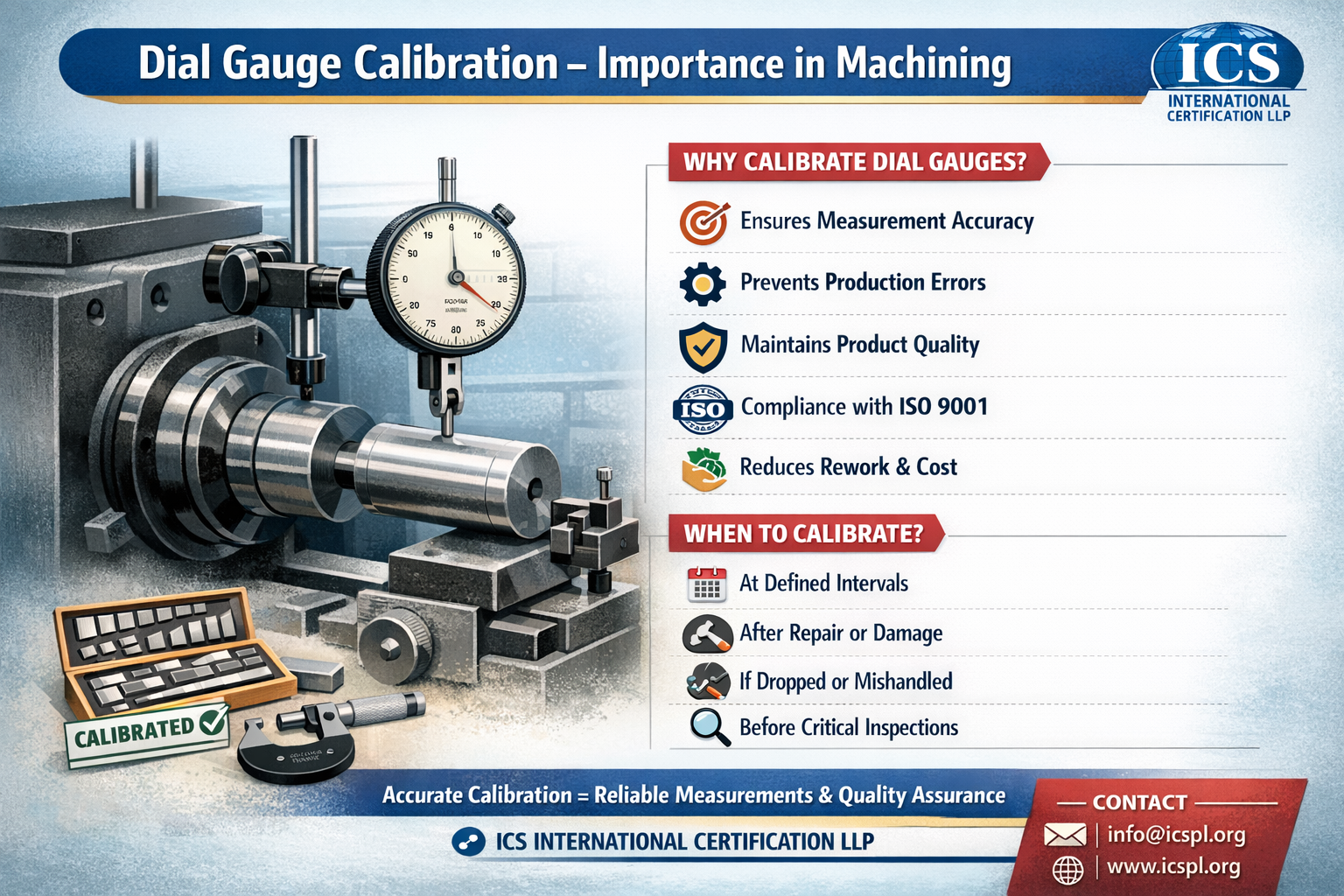
In precision machining, even a small deviation can lead to rejection, rework, or customer complaints. A dial gauge (dial indicator) is widely used to measure runout, alignment, flatness, and concentricity. Proper calibration of the dial gauge is essential to ensure accurate measurements and reliable quality control.
🔍 Why Dial Gauge Calibration is Important:
✅ Ensures Measurement Accuracy
Calibration verifies that the dial gauge readings are accurate as per standard reference (slip gauges / master standards).
✅ Prevents Production Errors
Incorrect readings may lead to wrong machining adjustments, causing dimension variation and rejection.
✅ Maintains Product Quality
Accurate runout and alignment checks help maintain tight tolerances in shafts, housings, and precision components.
✅ Compliance with ISO Standards
As per ISO 9001, measuring equipment must be calibrated and traceable to national/international standards.
✅ Reduces Rework & Cost
Timely calibration prevents batch rejection and improves overall process efficiency.
📌 When to Calibrate Dial Gauges?
- At defined periodic intervals
- After repair or damage
- If dropped or mishandled
- Before critical inspection jobs
🎯 Conclusion
Dial gauge calibration is not just a routine activity — it is a key element of precision machining and quality assurance. Regular calibration ensures reliable measurements, customer satisfaction, and compliance with international quality standards.
For professional calibration and certification services, contact ICS INTERNATIONAL CERTIFICATION LLP.