By ICS International Certification LLP
Introduction
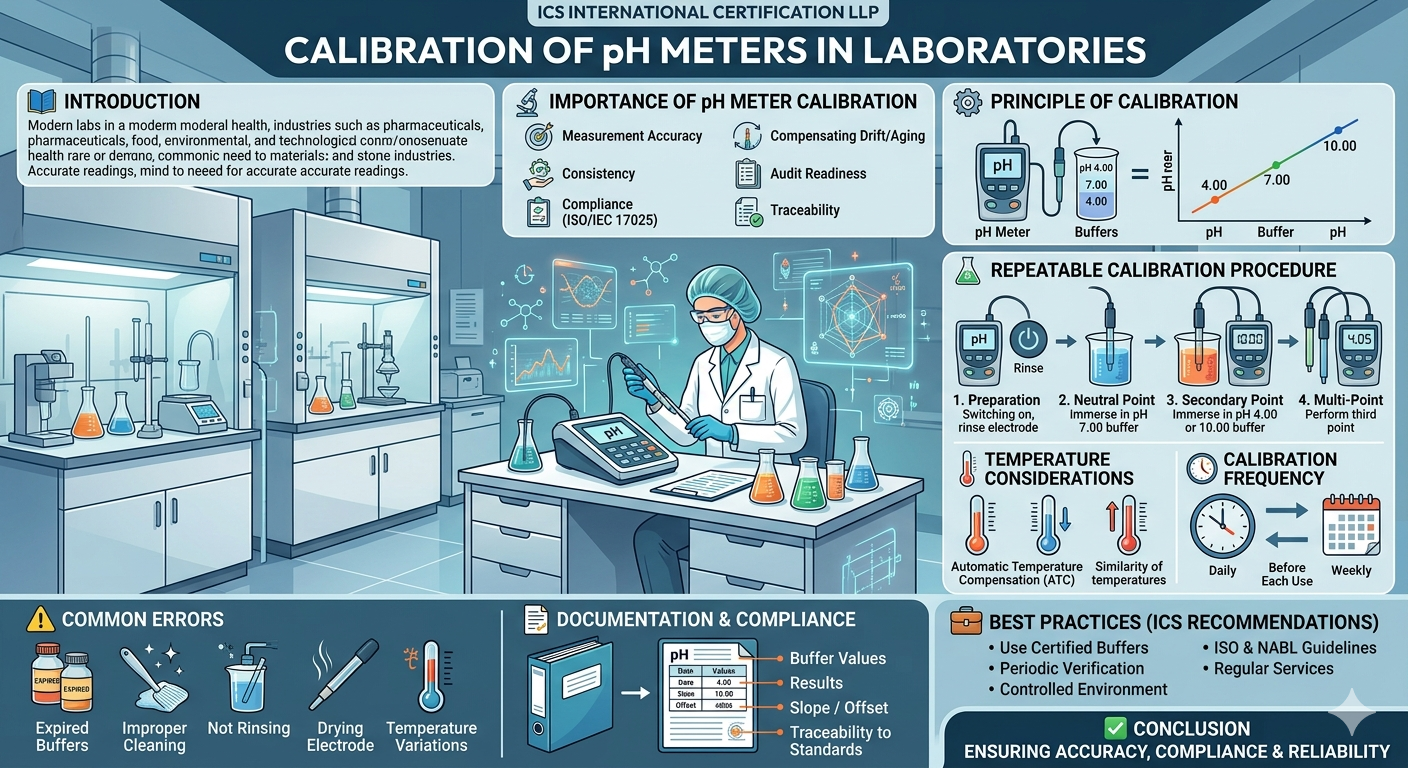
In modern laboratories, accurate pH measurement is critical for ensuring product quality, research validity, and regulatory compliance. pH meters are widely used across industries such as pharmaceuticals, food processing, environmental monitoring, and chemical testing.
However, the reliability of results depends heavily on proper calibration. Calibration ensures that the instrument provides accurate readings aligned with standard reference values.
Importance of pH Meter Calibration
Calibration of pH meters is essential to:
- Maintain measurement accuracy and consistency
- Ensure compliance with standards like ISO/IEC 17025
- Compensate for electrode drift and aging
- Support audit readiness and traceability
Regular calibration also provides documented evidence that the instrument meets required performance criteria, which is crucial during inspections and certifications.
Principle of Calibration
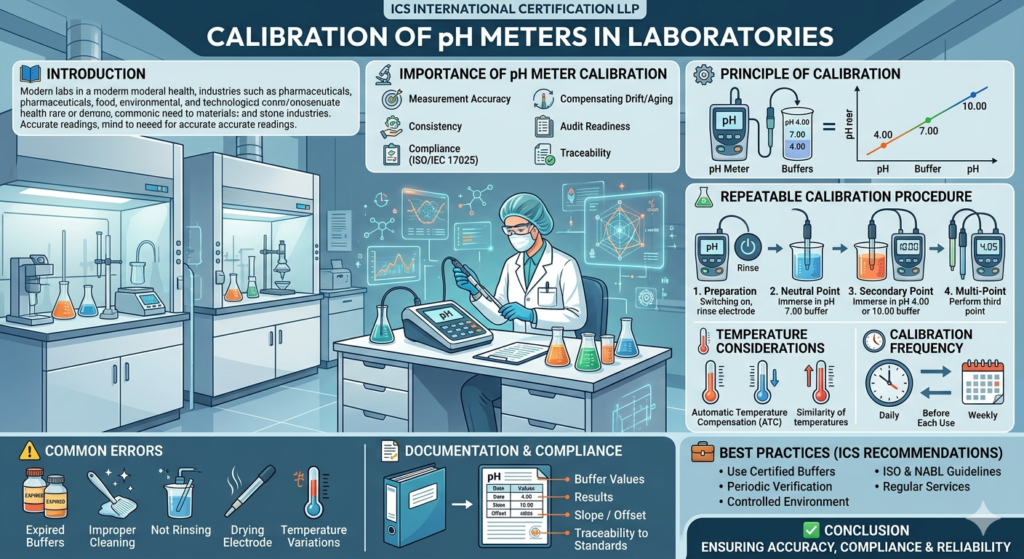
pH meter calibration is performed by comparing the instrument readings with standard buffer solutions of known pH values.
Typical calibration points include:
- pH 4.00 (acidic)
- pH 7.00 (neutral)
- pH 10.00 (alkaline)
These buffers help establish a reliable calibration curve for accurate measurement across the working range.
Standard Calibration Procedure
1. Preparation
- Switch on the pH meter and allow stabilization
- Rinse the electrode with distilled water and gently blot dry
2. Calibration at Neutral Point
- Immerse electrode in pH 7.00 buffer
- Wait for reading stabilization
- Adjust the meter to match the buffer value
3. Calibration at Secondary Point
- Rinse electrode thoroughly
- Immerse in pH 4.00 or pH 10.00 buffer
- Adjust accordingly
4. Multi-Point Calibration (Recommended)
- Perform a third calibration point for improved accuracy
- Particularly important for wide measurement ranges
Temperature Considerations
Temperature significantly affects pH readings.
- Use meters with Automatic Temperature Compensation (ATC)
- Ensure calibration and measurement are performed at similar temperatures
Calibration Frequency
Calibration frequency depends on usage and accuracy requirements:
- Daily (for critical laboratory testing)
- Before each use (high precision work)
- Weekly (routine analysis)
Frequent calibration is recommended where accuracy is crucial.
Common Errors in Calibration
Avoid the following mistakes:
- Using expired or contaminated buffer solutions
- Improper electrode cleaning
- Not rinsing between buffer solutions
- Allowing electrode to dry out
- Ignoring temperature variations
Documentation & Compliance
As per laboratory best practices:
- Maintain calibration records (date, buffer values, results)
- Record slope and offset values
- Ensure traceability to national/international standards
Calibration documentation plays a vital role in audits and certification processes.
Best Practices Recommended by ICS
At ICS International Certification LLP, we recommend:
- Use of certified buffer solutions
- Periodic verification of electrode condition
- Calibration under controlled environmental conditions
- Compliance with ISO and NABL guidelines
- Regular internal and external calibration services
Conclusion
Calibration of pH meters is not just a routine activity—it is a fundamental requirement for ensuring accuracy, compliance, and reliability in laboratory measurements.
By following proper calibration procedures and maintaining documented records, laboratories can achieve high-quality results and meet international standards with confidence.