By ICS International Certification LLP
Introduction
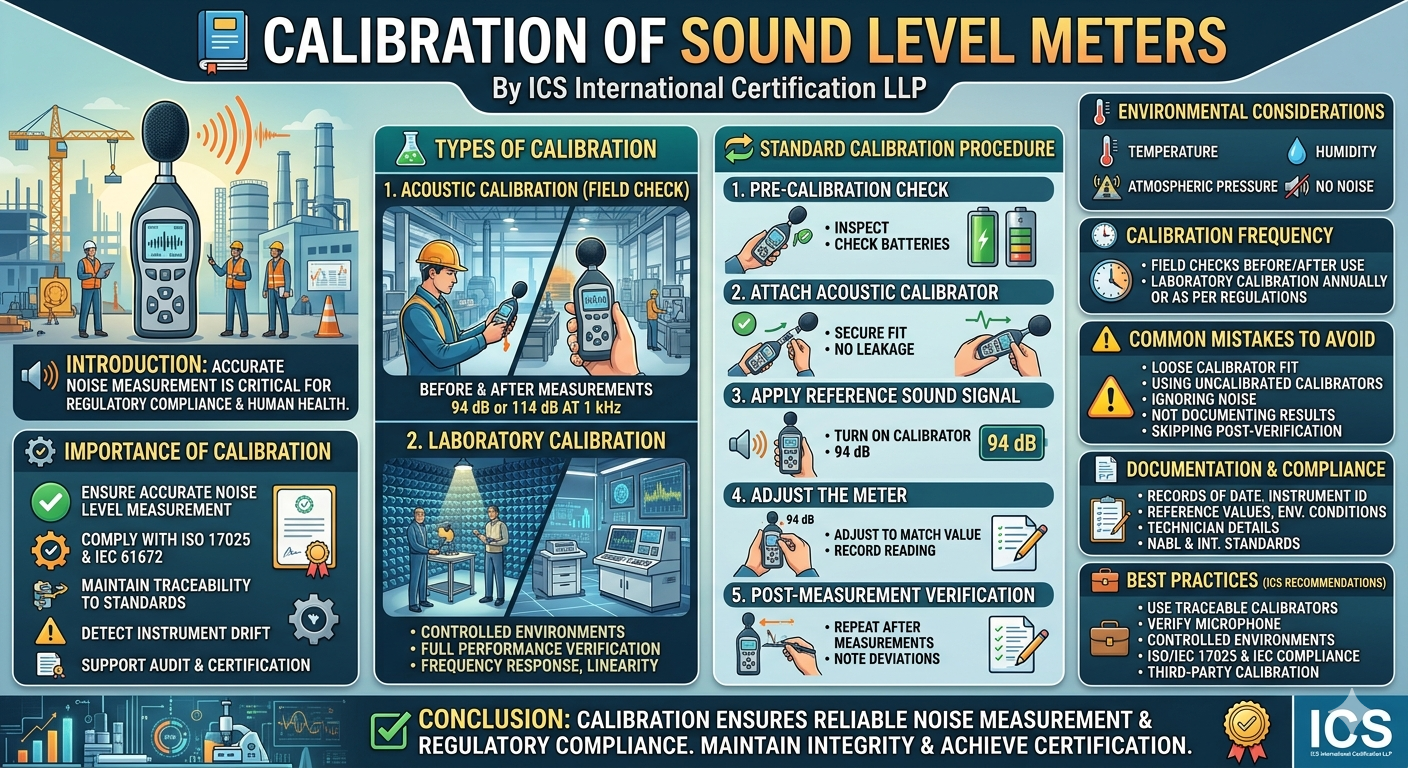
Sound Level Meters (SLMs) are essential instruments used to measure noise levels in environments such as industrial workplaces, environmental monitoring sites, construction zones, and laboratories. Accurate noise measurement is critical for ensuring compliance with regulatory standards and protecting human health.
Calibration of sound level meters ensures that measurements remain precise, reliable, and traceable to recognized standards.
Importance of Calibration
Proper calibration of sound level meters is necessary to:
- Ensure accurate noise level measurement
- Comply with standards such as ISO 17025 and IEC 61672
- Maintain traceability to national/international standards
- Detect instrument drift or microphone sensitivity changes
- Support audit and certification requirements
Types of Calibration
1. Acoustic Calibration (Field Calibration)
- Performed using an acoustic calibrator
- Typically at 94 dB or 114 dB at 1 kHz
- Conducted before and after measurements
2. Laboratory Calibration
- Performed in controlled environments
- Includes full performance verification
- Covers frequency response, linearity, and time weighting
Standard Calibration Procedure
1. Pre-Calibration Check
- Inspect the sound level meter and microphone
- Ensure batteries are adequately charged
- Check environmental conditions
2. Attach Acoustic Calibrator
- Fit the calibrator securely onto the microphone
- Ensure no sound leakage
3. Apply Reference Sound Signal
- Turn on the calibrator (usually 94 dB at 1 kHz)
- Allow the reading to stabilize
4. Adjust the Meter
- Adjust the sound level meter to match the calibrator value
- Record the reading
5. Post-Measurement Verification
- Repeat calibration after measurements
- Note any deviation
Environmental Considerations
- Temperature, humidity, and atmospheric pressure can affect readings
- Avoid calibration in noisy environments
- Use calibrators with environmental correction if required
Calibration Frequency
- Before and after each use (field checks)
- Annually for laboratory calibration
- As per internal quality procedures or regulatory requirements
Common Mistakes to Avoid
- Loose fitting of calibrator on microphone
- Using uncalibrated or expired acoustic calibrators
- Ignoring environmental noise during calibration
- Not documenting calibration results
- Skipping post-measurement verification
Documentation & Compliance
Maintain proper records including:
- Calibration date and time
- Instrument and calibrator identification
- Reference values and observed readings
- Environmental conditions
- Technician details
This documentation is essential for compliance with NABL and international standards.
Best Practices Recommended by ICS
At ICS International Certification LLP, we recommend:
- Use of traceable acoustic calibrators
- Regular verification of microphone condition
- Calibration in controlled environments
- Compliance with ISO/IEC 17025 and IEC standards
- Periodic third-party calibration for accuracy assurance
Conclusion
Calibration of sound level meters is a critical process to ensure reliable noise measurement and regulatory compliance. Regular calibration, proper documentation, and adherence to international standards help organizations maintain measurement integrity and achieve certification requirements.