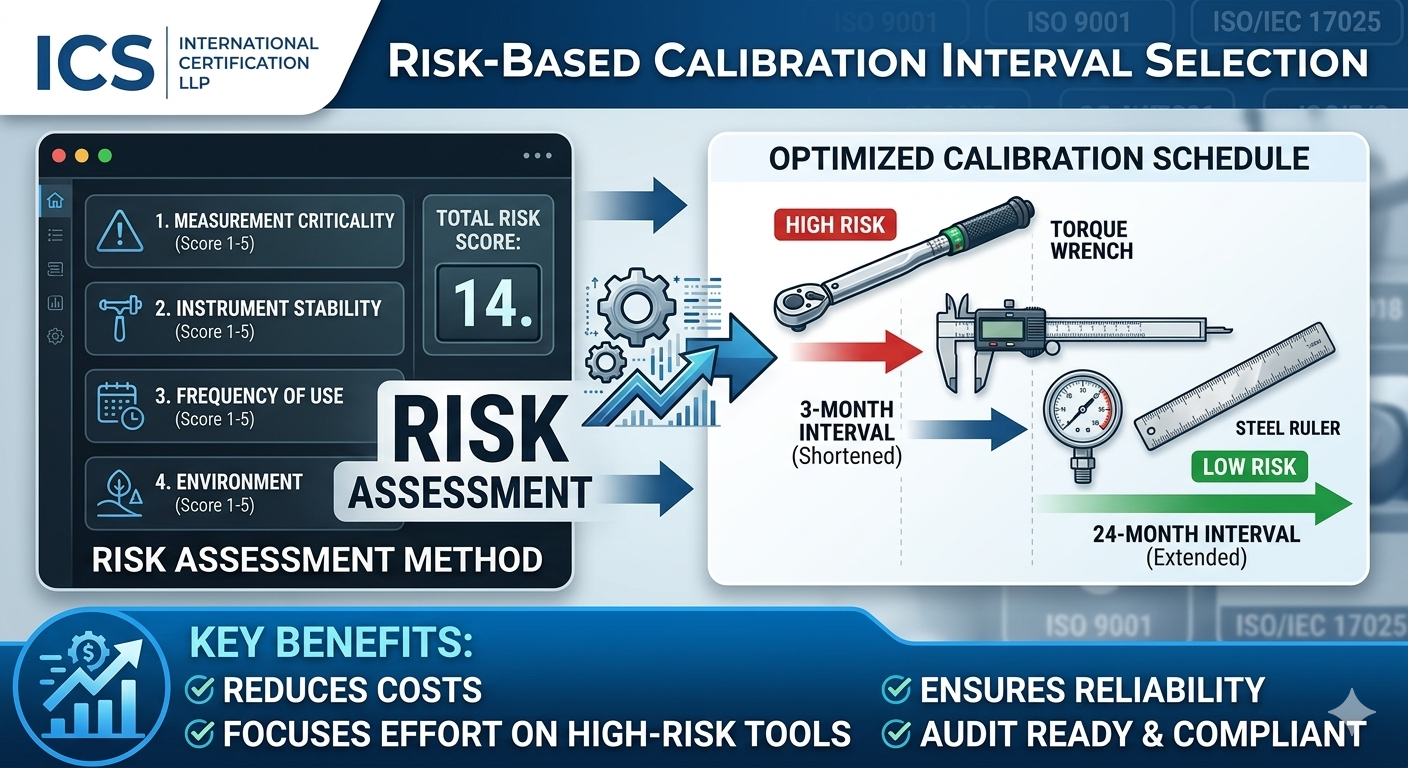
Risk-Based Calibration Interval Selection is a method used to decide how often measuring instruments should be calibrated based on risk, instead of using a fixed time interval (like every 6 or 12 months). It is widely used in quality systems such as ISO 9001, ISO/IEC 17025, and IATF 16949 to ensure measurement reliability while avoiding unnecessary calibrations.
1. Concept
The basic idea is:
Calibration frequency should depend on the risk that incorrect measurements could cause.
Higher risk instruments → shorter calibration intervals
Lower risk instruments → longer calibration intervals
2. Key Factors Considered
Risk-based interval selection evaluates several factors:
1️⃣ Criticality of Measurement
- How important the measurement is to product quality or safety.
- Example:
- Torque wrench for aircraft parts → High risk
- Steel ruler for rough measurement → Low risk
2️⃣ Instrument Stability
- Historical calibration data.
- Instruments that drift frequently require shorter intervals.
3️⃣ Frequency of Use
- Frequently used equipment wears faster.
Example:
| Usage | Risk |
|---|---|
| Used daily | High |
| Used occasionally | Medium |
| Rarely used | Low |
4️⃣ Environmental Conditions
- Temperature variation
- Humidity
- Dust
- Vibration
Harsh environments increase risk.
5️⃣ Manufacturer Recommendation
Manufacturers often suggest calibration intervals.
Example:
- Digital pressure gauge → 12 months recommended.
6️⃣ Past Calibration Results
Look at previous calibration reports:
- If consistently within tolerance, interval can be increased.
- If often out of tolerance, interval should be reduced.
3. Risk Assessment Method (Simple Scoring Model)
Many companies use a risk score system.
Example:
| Factor | Score |
|---|---|
| Measurement criticality | 1–5 |
| Usage frequency | 1–5 |
| Environment | 1–5 |
| Stability history | 1–5 |
Total Score = Risk Level
| Score | Calibration Interval |
|---|---|
| 4–8 | 24 months |
| 9–12 | 12 months |
| 13–16 | 6 months |
| 17–20 | 3 months |
4. Example
Instrument: Digital Vernier Caliper
| Factor | Score |
|---|---|
| Criticality | 3 |
| Usage | 4 |
| Environment | 2 |
| Stability | 2 |
Total = 11
➡ Calibration Interval = 12 months
5. Benefits
✔ Reduces unnecessary calibration cost
✔ Focuses on high-risk instruments
✔ Improves measurement reliability
✔ Meets audit expectations
6. Documentation Required
Organizations should maintain:
- Calibration risk assessment record
- Instrument history
- Calibration results trend
- Justification for interval selection
✅ In audits, auditors usually check whether the interval decision is data-based and justified, not random.