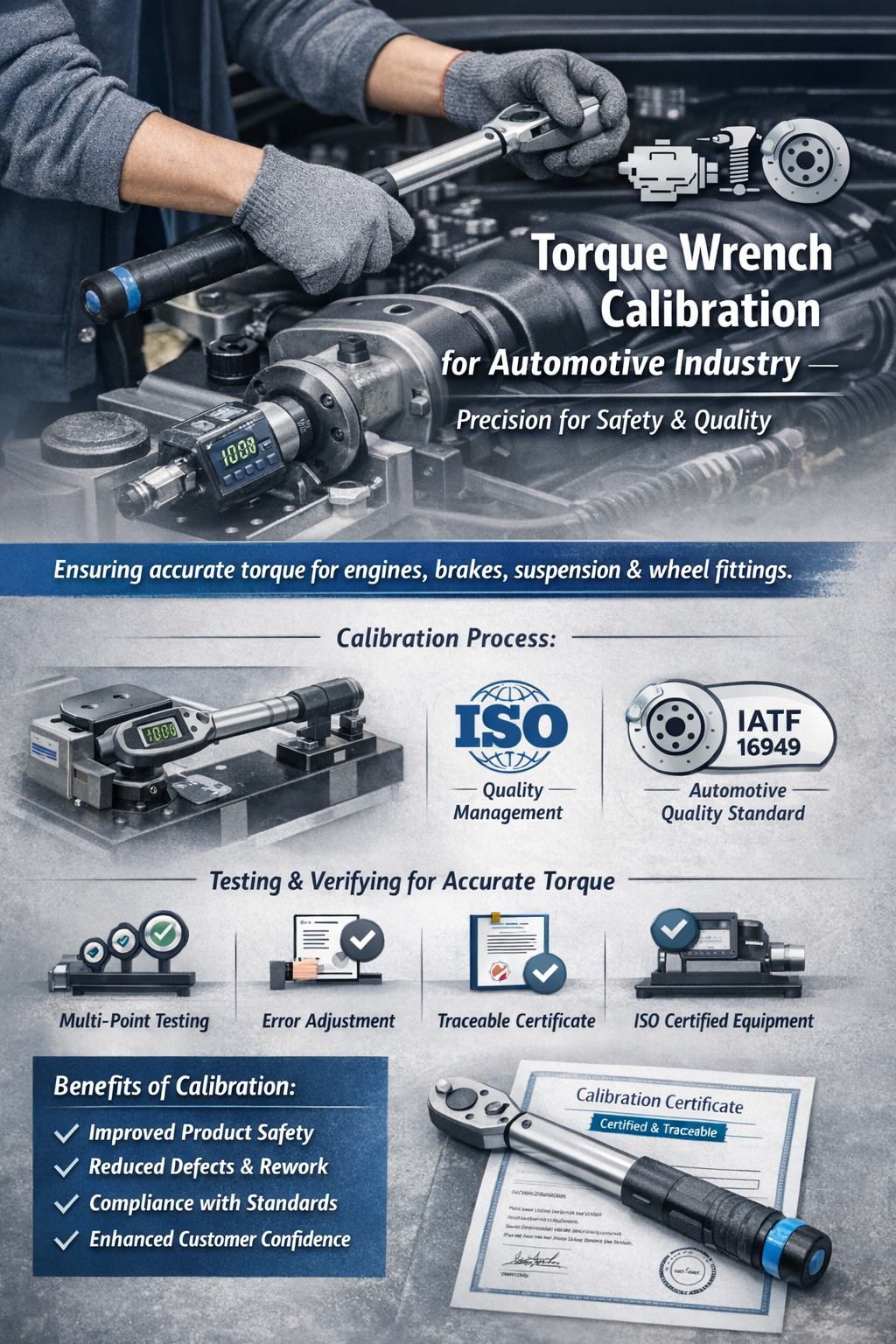
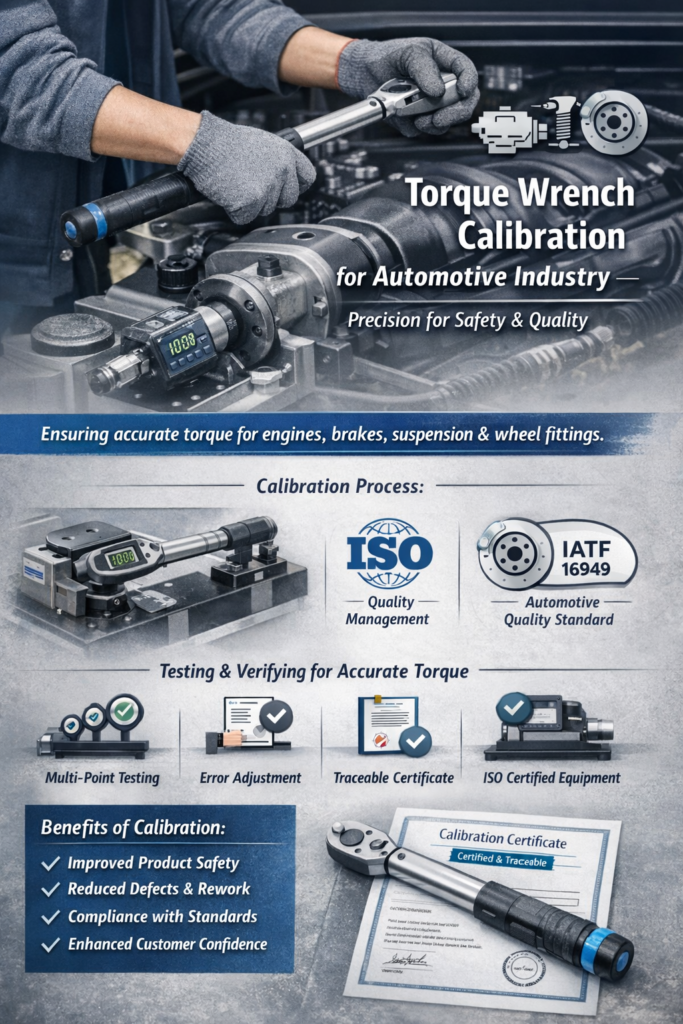
In the automotive industry, accurate torque application is essential for safety, performance, and reliability. Torque wrenches are used in critical assemblies such as engines, brakes, suspension, and wheel fittings—where even small deviations can lead to failures or safety risks.
Regular calibration ensures tools deliver correct torque values and comply with standards like ISO 9001 and IATF 16949. It also supports audit readiness and OEM requirements.
Calibration typically includes testing at multiple torque points, error verification, adjustment (if required), and issuance of a traceable calibration certificate.
Benefits of Torque Wrench Calibration:
✔ Improved product safety
✔ Reduced defects and rework
✔ Compliance with quality standards
✔ Enhanced customer confidence
In automotive manufacturing, precision is not optional—calibrated tools ensure consistent and reliable performance.